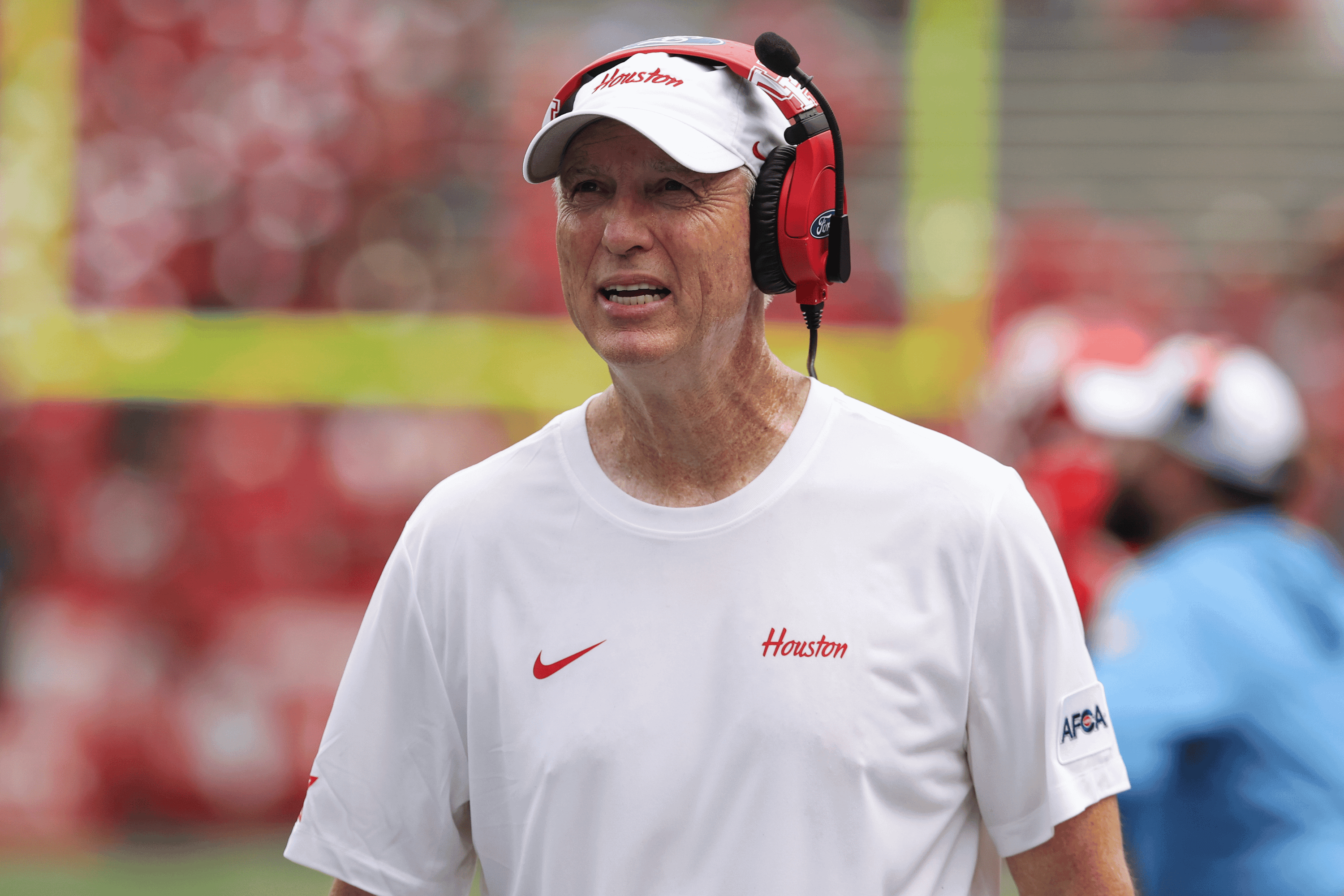

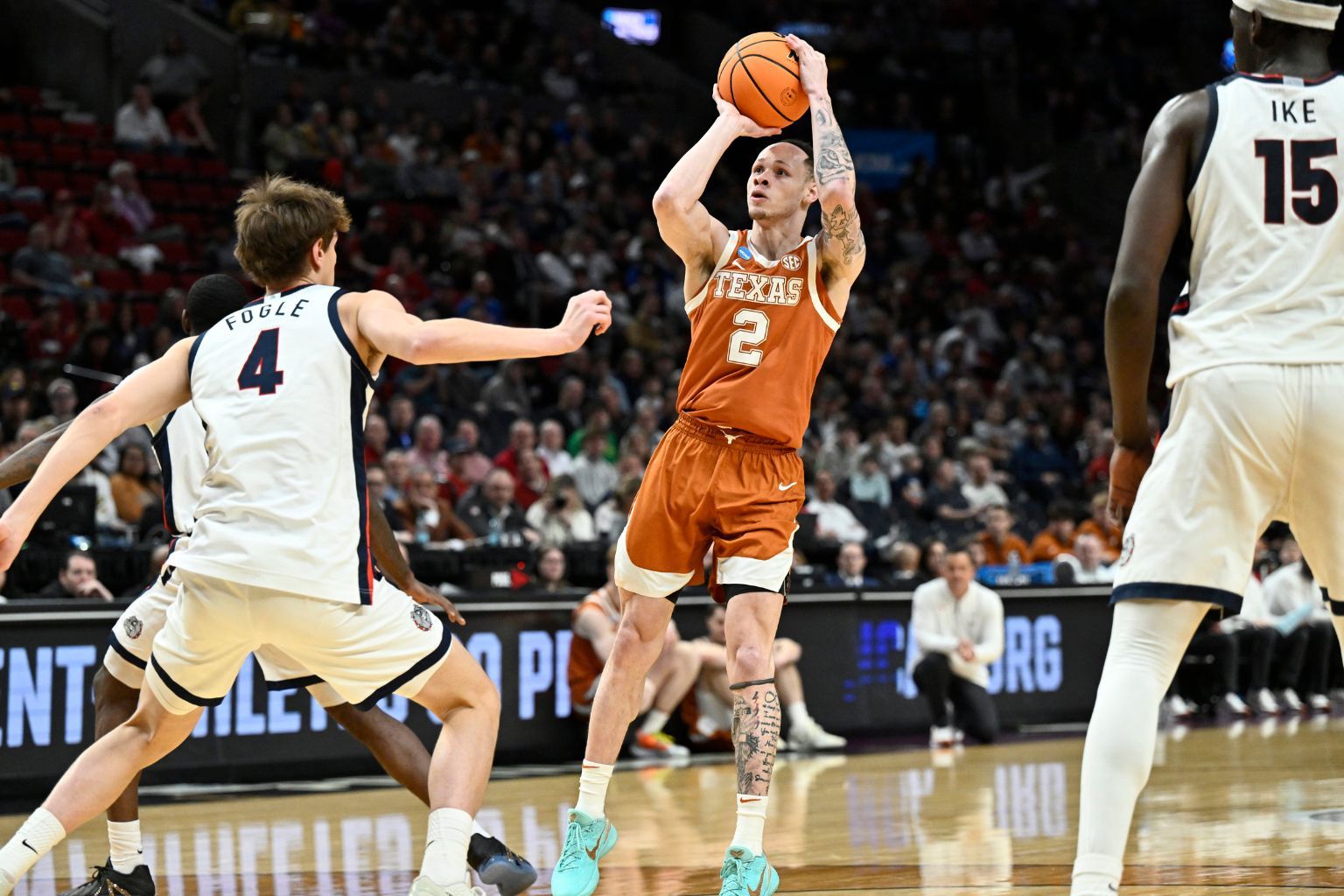
Draw a line from Arlington to Austin to Houston, and you get something closer to a triangle than a career path—three cities, a few hundred miles, and not one of them outside the borders of the state that raised him. That's the whole story of Chendall Weaver in geography before it's a story in box scores: a Mansfield kid about to finish his college basketball career, having never worn a jersey that wasn't stitched in Texas.
This week's version of that story is a transfer, technically. Weaver, fresh off winning an extra year of eligibility in a lawsuit against the NCAA, is leaving Texas for Houston. Longhorns to Cougars. Burnt orange to red. SEC to Big 12. On paper, it's a rival swap, the kind of move that gets replayed on local sports radio with a little edge in the host's voice. In practice, it's closer to a shrug: of course he stayed home. He always does.
https://twitter.com/SECNetwork/status/2030472102671781904?s=20
Start with what got him here. Weaver spent three seasons at Texas after transferring in as a standout freshman from UT-Arlington, and he became exactly the kind of player every good roster needs and almost nobody notices a 6-foot-3 guard who came off the bench in 73 of his 90 games, guarded the other team's best perimeter scorer, and let his rebounding do the talking; his shot chart never did. Averaging 5.8 points and 4.1 rebounds isn't a line that gets you a shoe deal. It's a line that gets you minutes in March, which is the better trade in the sport that actually matters
He proved it, too. In the First Four last spring, with Texas's season one loss from never starting, Weaver put together the first double-double of his Longhorns career at the worst possible time to have a first one 11 points, 10 rebounds, four of them on the offensive glass, in a 68-66 escape act over NC State. Two games and a couple of nervous finishes later, an 11-seed Texas team was in the Sweet 16, and Weaver's fingerprints were on the ugliest, most necessary part of it: the extra possessions nobody plans for but every upset needs.
Then the lawsuit worked, and the roster didn't. Weaver won the right to a fifth season right as Texas ran out of room to give him one a small, almost bureaucratic irony, the kind college basketball produces constantly now that eligibility gets decided in courtrooms as often as it's decided by the calendar. So he went looking, and he didn't have to look far. Houston, fresh off a 30-7 season and a Sweet 16 exit of its own, needed exactly what Weaver has always offered: toughness that doesn't need the ball to matter.
If there's a program built for a player like this, it's Kelvin Sampson's. Houston's identity has never been about who scores; it's about who's still boxing out with four minutes left and the game gone feral. Weaver spent three years learning to be indispensable without being featured. That's not a skill you unlearn changing area codes—it's a skill Sampson has spent a decade recruiting for on purpose.
He won't walk into an empty room, either. Houston is retooling around him with LSU transfer Dedan Thomas, Purdue Fort Wayne's Corey Hadnot II, and a freshman point guard in Ikenna Alozie, who arrives with the kind of hype that makes grad transfers necessary in the first place somebody has to guard the other team's best player while the young pieces figure out who they're going to be. Forward Joseph Tugler, Chase McCarty, and guard Mercy Miller return from last year's rotation, which means Weaver isn't walking into a rebuild. He's walking into a program that already knows how to win in March and simply needed one more Texan who knows how, too.
There's a version of this offseason where Weaver takes his extra year somewhere flashier, a bigger role, a brighter jersey, a program without a rival's logo already burned into the local calendar. He didn't. He stayed home, the way he always has, in a state that's about to watch him finish his career exactly where it started: never having left it at all.