
There's a moment in every football game worth remembering when the play call quits mattering. The protection breaks. The route runs into a coverage nobody installed for. The quarterback stops reading the defense and starts arguing with it, out loud, with no lawyer and no timeout. Most possessions don't survive that argument. Houston's kept surviving it, on a Friday night that mattered a good deal more nationally than the final score will admit, because a 6-foot-5 tight end kept doing the one unglamorous thing his position exists to do: give Conner Weigman an answer, whether or not the question made any sense.
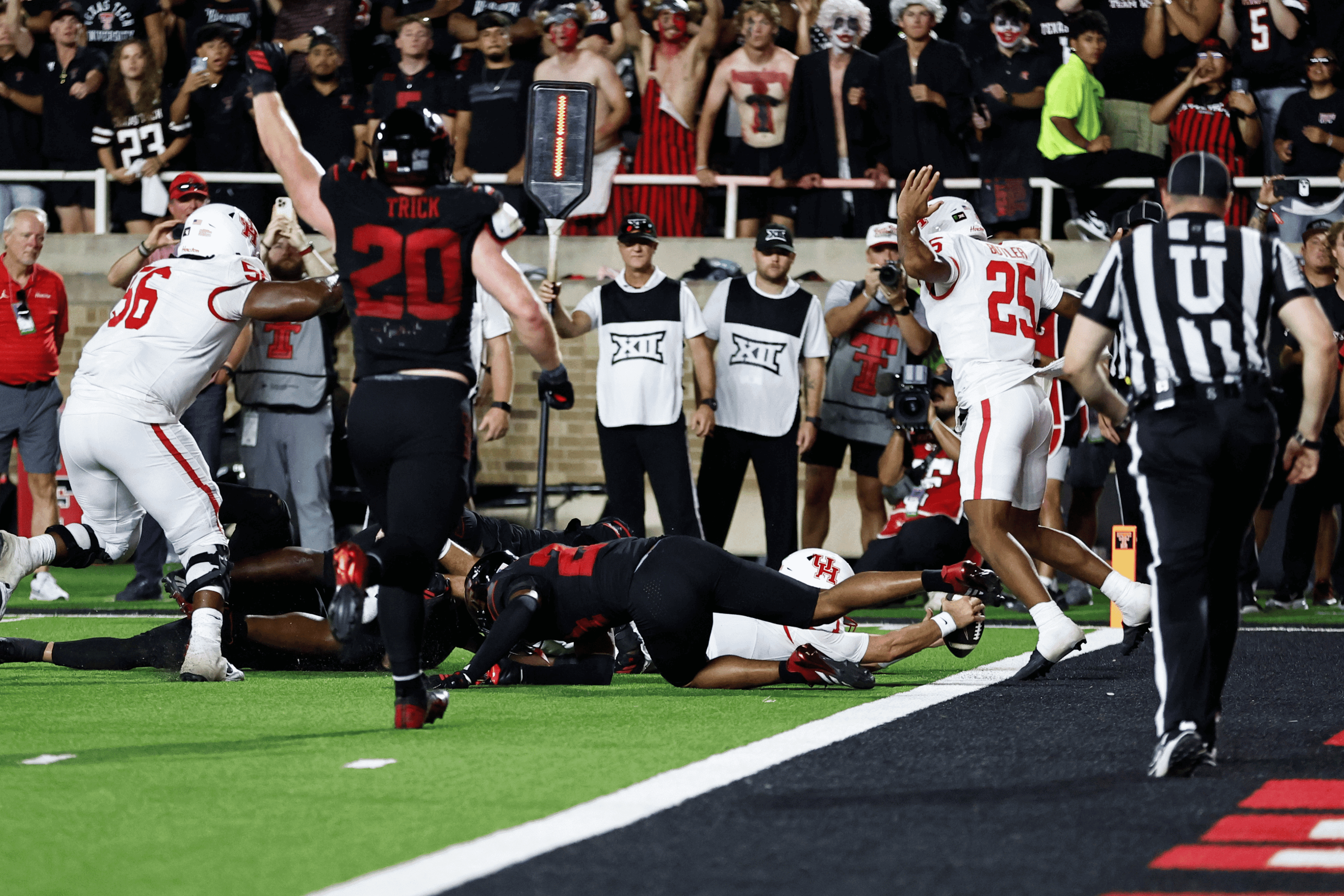
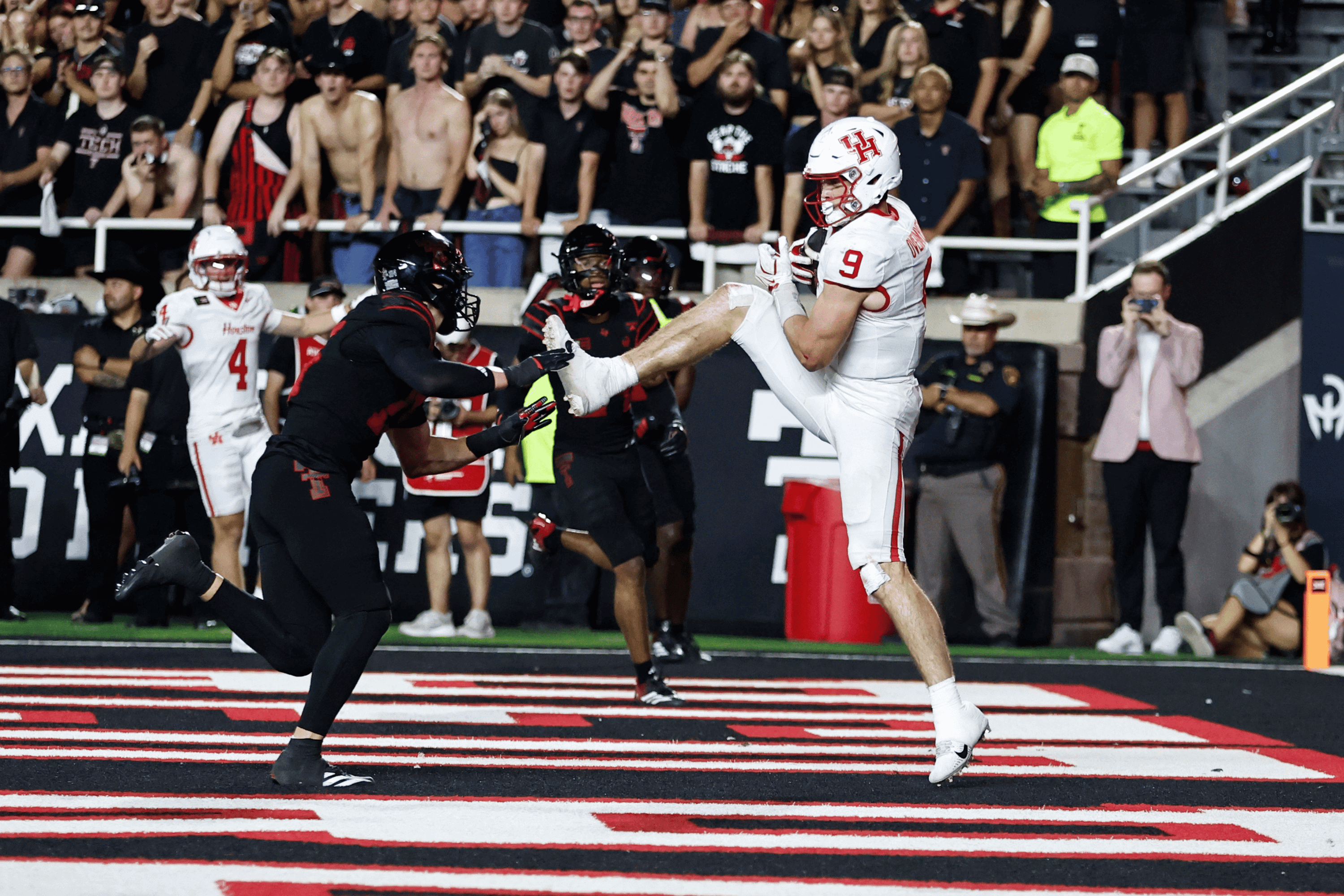
Patrick Overmyer caught eight passes for 72 yards and the fourth-quarter touchdown that pulled No. 22 Houston within two points of No. 13 Texas Tech, 28-26, in a Big 12 opener two unbeaten Top 25 teams needed for reasons that had nothing to do with each other's win column. Houston lost. Nobody outside of Texas is going to remember that stat line by Halloween. That's sort of the point of the position. Tight ends have never made their living being remembered. They make it being necessary, which is a considerably harder thing to be on national television.
This isn't another feature on a breakout tight end having a nice Friday. It's an explanation of why tight ends, at their best, function less like receivers and more like insurance policies — the one job on the field a coordinator trusts precisely because it doesn't need the play to have gone right in order to still work.
There's a phrase good staffs live by without ever needing to say it out loud: an offense doesn't get to choose what a defense shows it. It only gets to choose who's built to answer whatever the defense decides to be. A month into the season, with his name already on the preseason watch list for the John Mackey Award — the one that goes each year to the nation's best tight end — Overmyer is doing more answering for Houston than anyone outside the state has clocked yet.
Start with third down, the least interesting play in football, right up until it's the only one that matters. Overmyer isn't winning many footraces against a nickel corner. He's occupying the real estate a third-down conversion actually lives in — the window past the sticks, inside a defense that still has to respect the boundary. Weigman doesn't need him to separate on third-and-6. He needs him to be where the coverage isn't, and a big body with dependable hands sitting down in a soft spot is a low-variance way to keep a series alive that would otherwise stall.
Then there's broken structure, which is where a called play becomes a suggestion Texas Tech's defense treated as optional. A route concept assumes the defense plays the look it showed before the snap. When it doesn't — when a protection call gets beaten or a primary read disappears — the tight end is usually the built-in answer, not because he's the flashiest option on the sheet, but because his route is drawn to still be there after everything else on the field has stopped resembling the play as designed.
That leads to zone windows. Zone coverage was never built to stop every route; it's built to force a quarterback into the space between defenders — the seam, the hook, the soft grass under two deep safeties. Overmyer's size lets him sit in that space and shield the ball from a trailing linebacker instead of having to outrun one. Geometry, not deception — which is a fairly unglamorous way to become a problem for a defense, and an excellent way to still be playing meaningful football in December.
Which gets to protection disguise, the part that actually explains eight catches. Texas Tech spent the night showing pressure it didn't always bring and coverage it didn't always play — the oldest trick in the sport, and it still works, because quarterbacks are still human beings operating on a play clock. The tight end is usually the release valve on that gamble, aligned close enough to adjust his route to whatever look actually shows up, instead of being locked into a pattern 15 yards downfield and hoping for the best.
Compress the field and you get the red zone, where the same size becomes a different kind of problem. Overmyer's touchdown wasn't a footrace. It was a catch radius outmuscling a smaller body in a phone booth. Nobody drafts a tight end for his footwork. Offensive coordinator Slade Nagle didn't need a route tree inside the 10-yard line — he needed a contested-catch answer, and that's a matchup Houston will keep hunting on FOX and ABC and ESPN all season.
Add it up and you get pressure answers, the category that swallows the other five. When protection breaks down, when the coverage disguises itself into something the quarterback didn't expect, when third down turns into improvisation, an offense needs somebody who doesn't require the play to have gone right in order to still be useful. That's the job description. It's also the job Overmyer inherited this offseason from Tanner Koziol, who led every tight end in the country in catches a year ago running the same route concepts in the same building block of an offense — proof this isn't a scheme that got lucky once.
None of it looks like artistry. It looks like eight catches nobody screenshots and a touchdown that closed a two-point gap in a game Houston still lost. But Houston didn't lose Friday night because it ran out of answers. It lost because it ran out of time to ask the question one more time. That's not a box score. That's a tight end doing the one job on a football field that isn't allowed to have a bad day — because bad days are the only ones it was ever hired for. The Coogs remain on the road in Week 4 as they return to one of Willie Fritz ole stomping grounds to face Georgia Southern.