
HOUSTON — Preseason all-conference teams usually tell you who a program's best players are. This one tells you something more useful: how Houston actually plans to win football games in 2026.
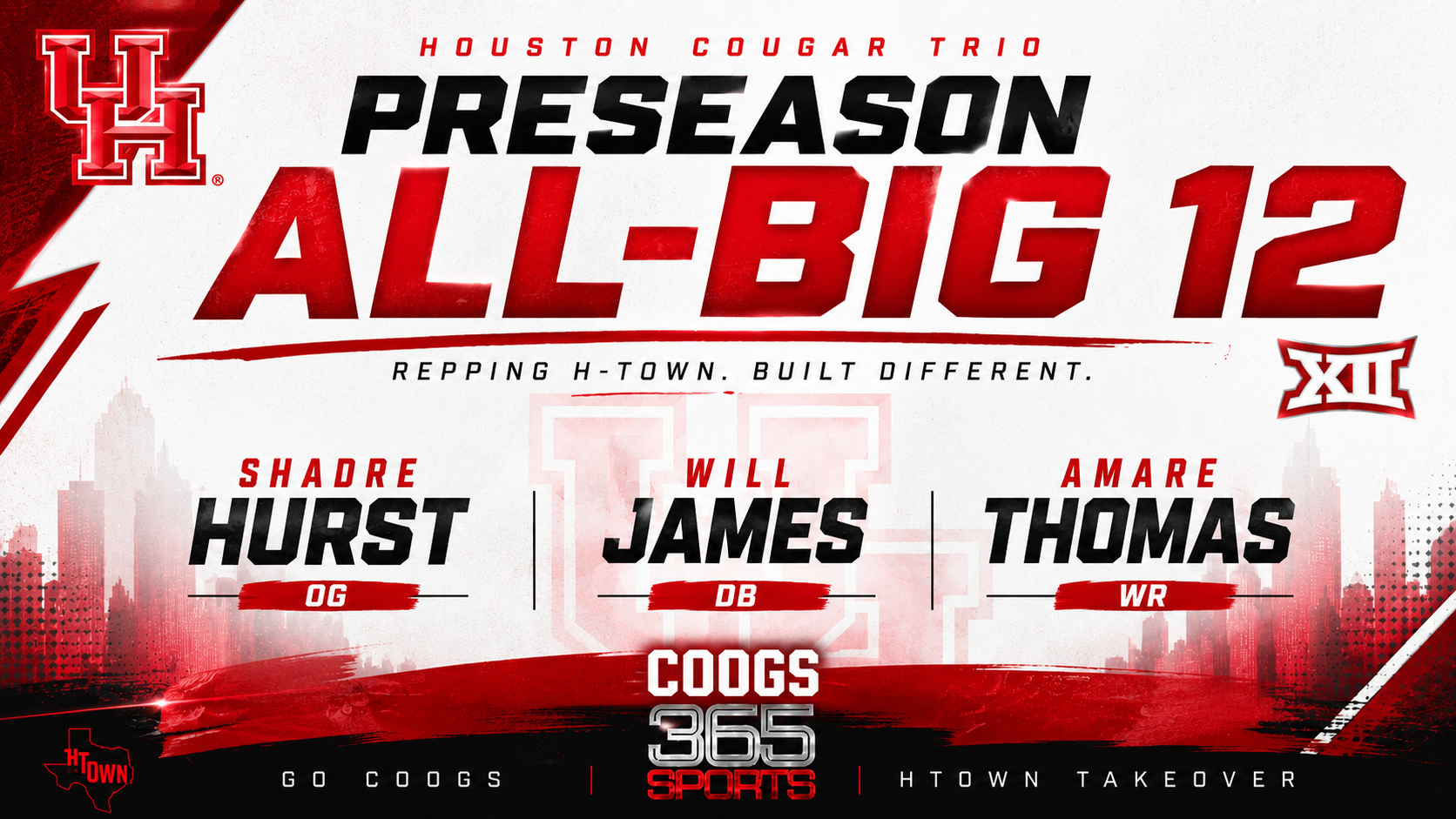
The Big 12 released its media-voted preseason All-Conference Team on Monday, and three Cougars made it, guard Shadre Hurst, defensive back Will James, and wide receiver Amare Thomas.
It's the third preseason honor of the summer for all three, arriving a day before Houston walks into Big 12 Media Days in Frisco. But strip away the recognition and look at what these three specific players actually do on the field, and you get a clean answer to the question every rising Big 12 program eventually has to answer: is the breakthrough season repeatable, or was it a one-year mirage?
Here, the tape says "repeatable" because these three honors don't reflect three unrelated good players. They reflect a specific formula.
Hurst is a pass-protection problem, not just a name
The instinct with offensive linemen is to lump every all-conference guard into the same bucket. Don't do that with Hurst. His signature number isn't a broad "grade" it's a 90.5 pass-blocking mark, which is the profile of a guard who wins with anchor and hand placement in obvious passing situations, not just a road-grader who mauls people in short-yardage runs. That distinction matters enormously for what Houston wants to do on offense.
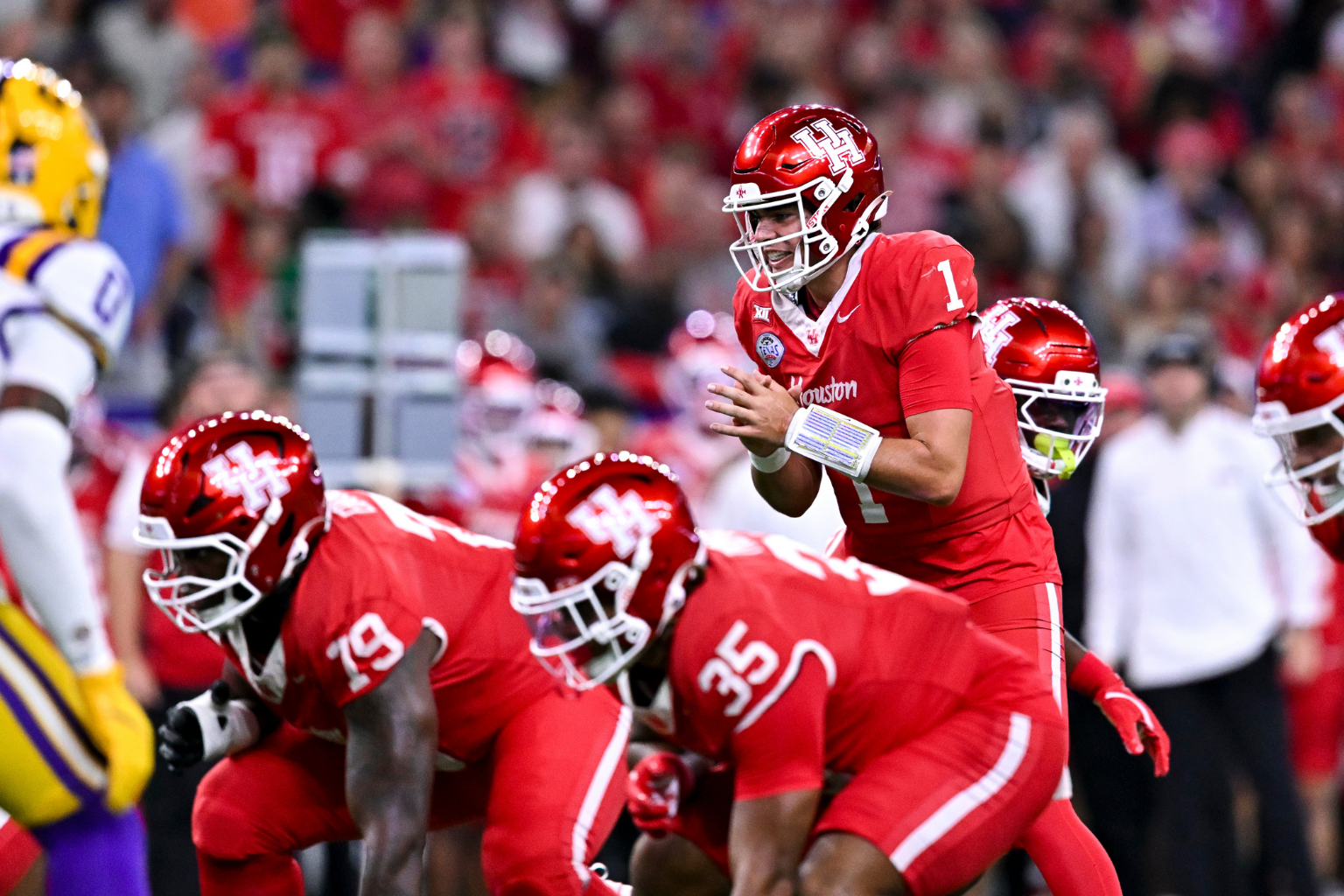
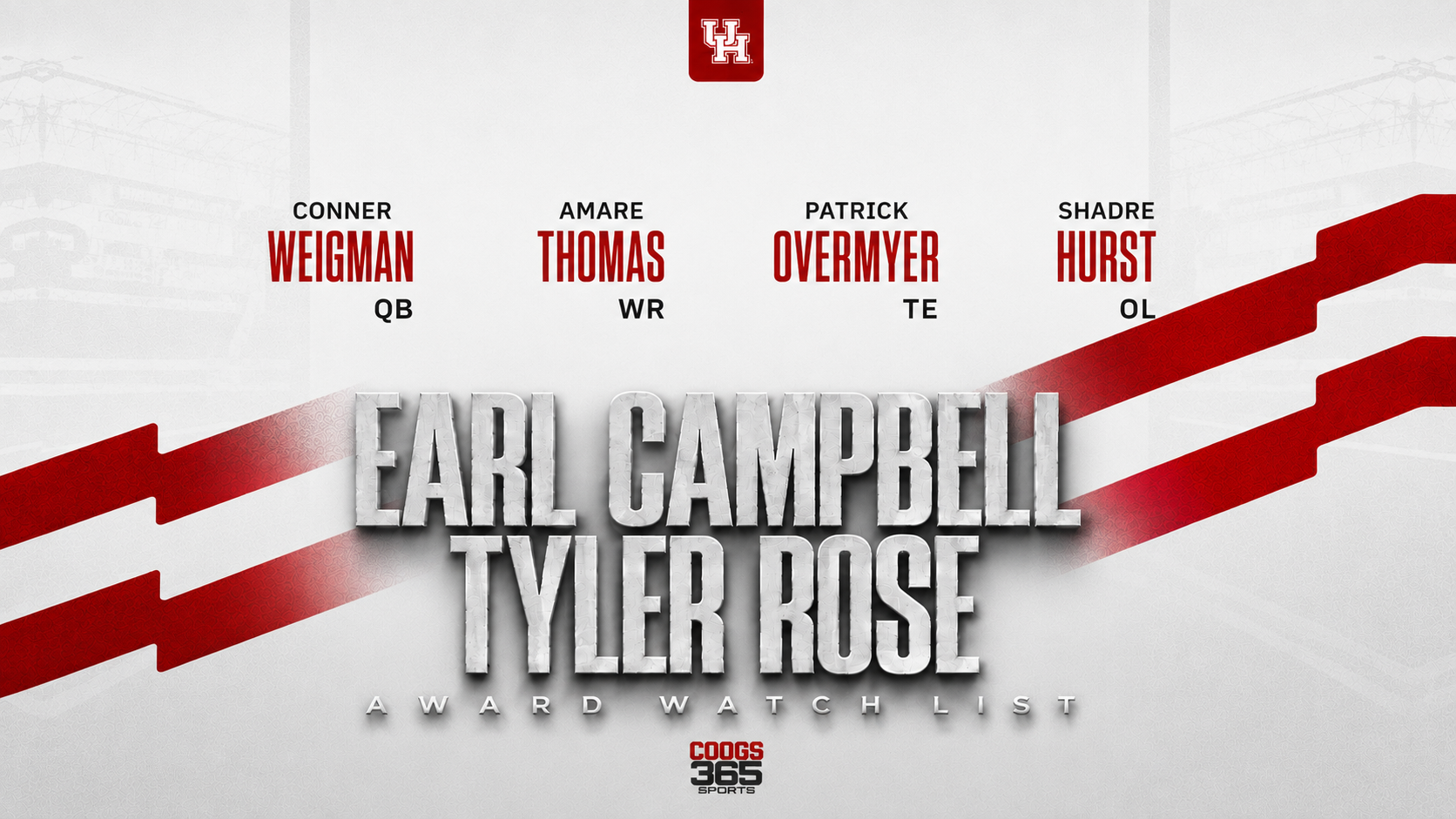
Conner Weigman is a quarterback who wins extending plays he ran for 114 yards against TCU alone last season. A mobile, escape-first quarterback only gets to use that trait if the pocket holds long enough for the escape lanes to open, and interior pressure is what usually kills scramble opportunities before they start. A guard who wins his one-on-ones inside doesn't just protect Weigman he buys him the extra half-second that turns a coverage sack into a first-down scramble. That's a different value proposition than a guard who's simply good against the run, and it's exactly the value Houston is banking on by handing Hurst one of the two interior spots.
James' interceptions are a scheme signal, not just a stat
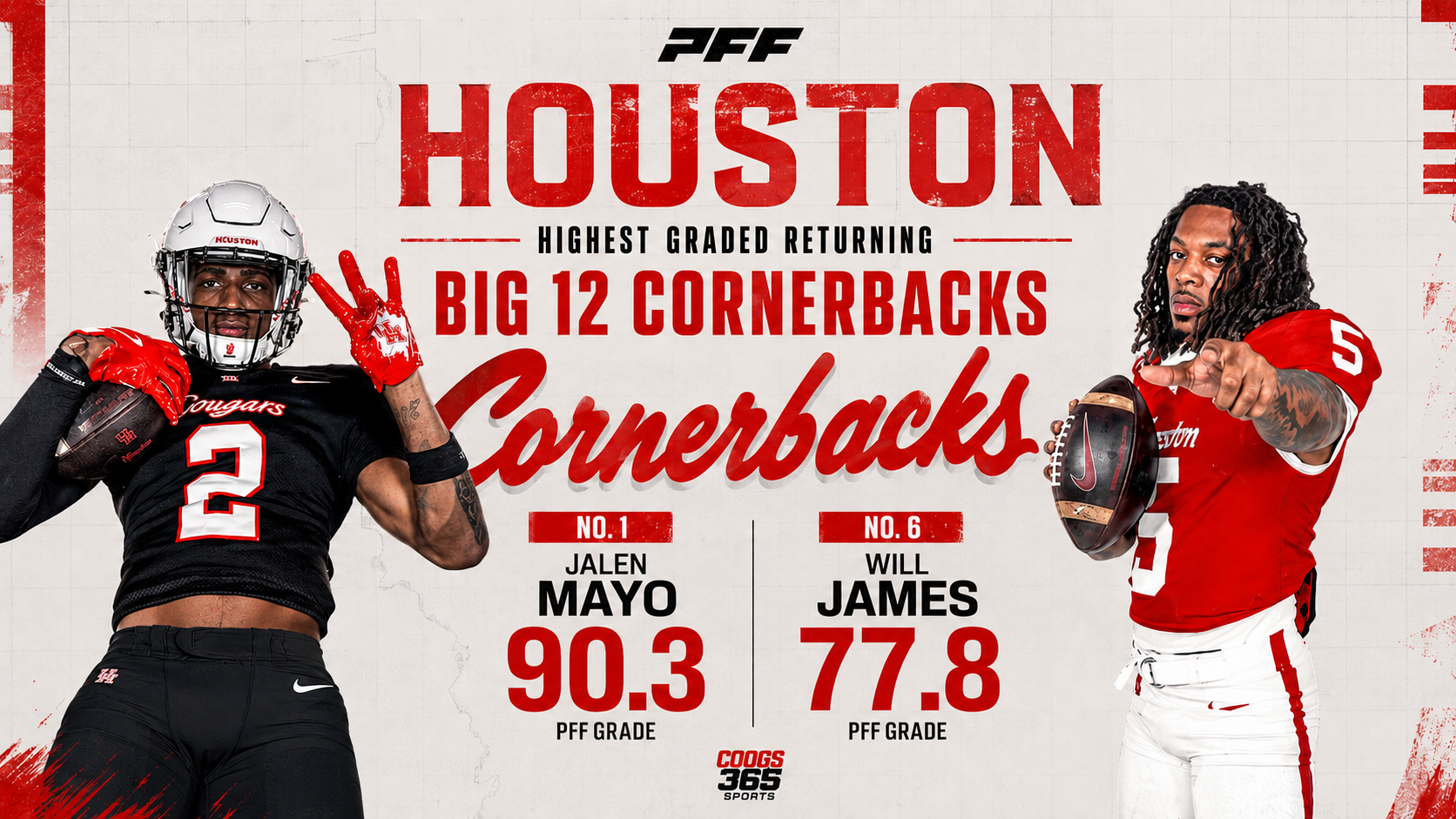
Three interceptions and eight pass breakups are a good season for a defensive back. But look at where those interceptions came from: two of James' three picks came in a single game, against a TCU offense that was moving the ball freely everywhere else on the field. That's not a product of a defense that shut a quarterback down — it's a product of a defensive back who capitalizes disproportionately when the ball is actually in the air near him, regardless of whether the rest of the unit is having a clean day.
That's a specific and valuable trait for a defense that isn't yet the most talented unit on the field snap-for-snap. Houston's defense doesn't need to be dominant on every down to be functional if it has a player who turns a fraction of contested throws into extra possessions. Pair that with two forced fumbles and four tackles for loss, and James isn't profiling as a cover corner who waits for the ball to come to him — he's profiling as a disruptor who affects plays even when he isn't the primary coverage responsibility. Programs that make sudden Big 12 jumps almost always have at least one defensive back doing exactly that.
Thomas isn't just productive—he's the release valve on scramble plays
The 966 yards and 12 touchdowns get the attention, but the more predictive number is the split: six of Thomas' touchdowns came on 20-plus-yard throws, and three came on plays of 50-plus yards. A possession receiver racks up catches. A field-stretching receiver racks up touchdowns from a distance, and that only happens if a receiver is winning vertically against man coverage or finding the soft spot in a defense that's already been forced to widen out.
Connect that back to Weigman's mobility, and the fit becomes obvious. When a scramble-prone quarterback buys extra time, the receiver who benefits isn't the possession slot running a quick out; it's the receiver already working vertically, because a broken pocket turns a covered deep route into an uncovered one the instant the defense's eyes come off their assignment. Thomas' profile as a big-play threat isn't just a receiving stat on its own; it's the exact receiver type that turns Weigman's improvisational instincts into touchdowns instead of checkdowns.
The pieces fit on purpose
None of these three honors happened in isolation, and that's the actual story here. An interior lineman built to extend the pocket. A quarterback who uses that extra time to escape and create. A receiver built specifically to punish a defense the moment it loses discipline chasing that escape. And on defense, a corner who turns the other team's mistakes into possessions Houston's offense doesn't have to fight as hard to score with.
That's not three good players who happened to end up on the same preseason ballot. That's a program-building formula and it's why Houston shows up to Frisco this week as a team the rest of the Big 12 has to actually game-plan for, not just acknowledge.