
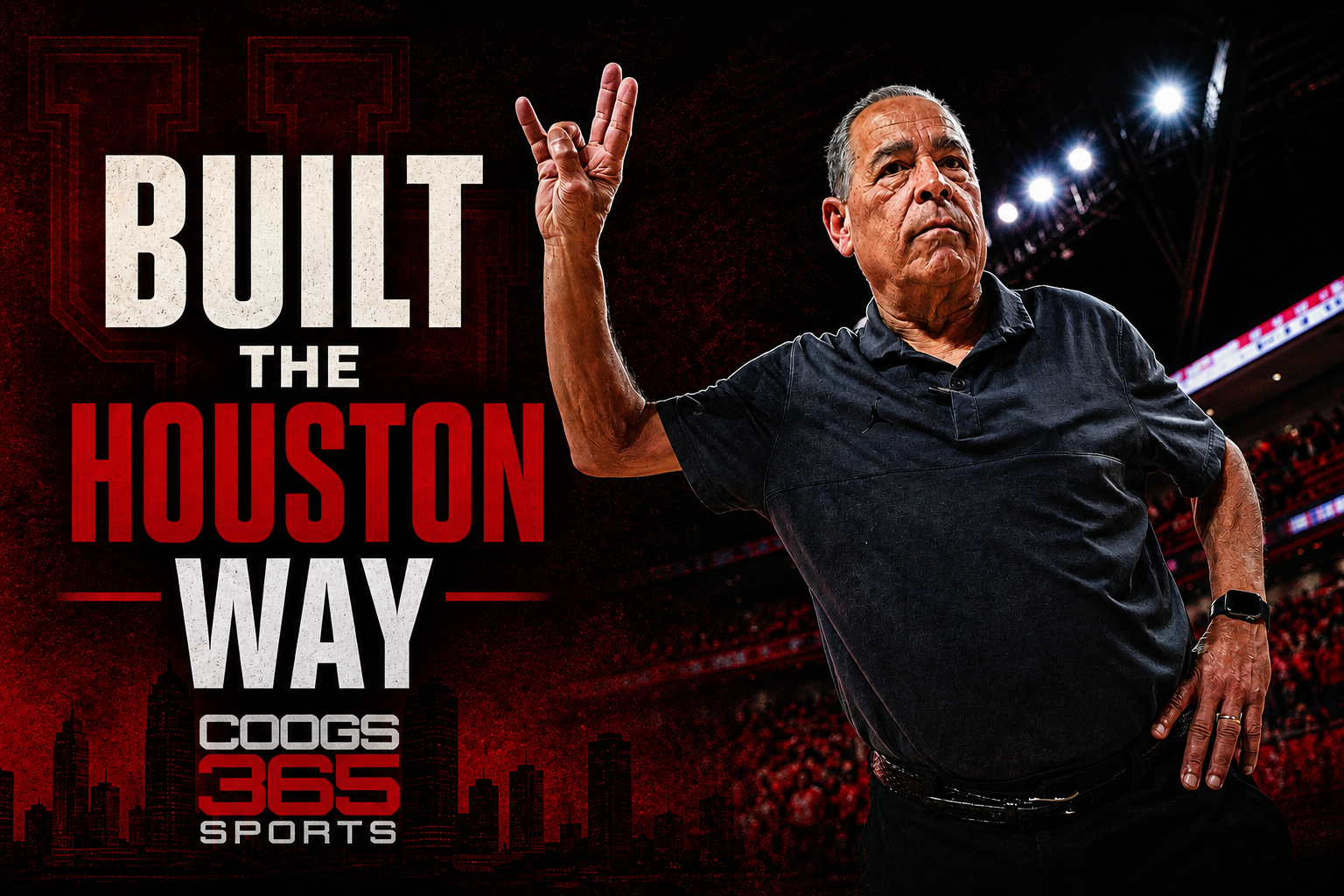
The transfer portal has changed college basketball into a year-to-year survival exercise. Programs chase production. Coaches gamble on upside. Rosters flip overnight. Culture disappears faster than wins can replace it. Yet somehow, year after year, Kelvin Sampson keeps making Houston feel immune to the chaos.
That is the real story of Houston’s 2026 portal cycle. The Cougars are coming off another championship-caliber season, but this offseason carried a different kind of pressure. Houston is losing its top four scorers. Veteran leadership is gone. NBA decisions reshaped the roster. And while the program likely hoped Kingston Flemings would spend more than one season in Third Ward, his rapid rise only reinforced what the rest of college basketball already knows: Houston develops pros now. That matters.
In today’s era, elite players do not stay unless elite programs can prepare them for the next level. Flemings leaving early is not a setback for Houston. It is proof the machine is working. The fascinating part is what Sampson did next. He did not panic. He did not chase flashy names that would force Houston to compromise its identity. Instead, Houston attacked the portal the same way it attacks games in March—with toughness, rebounding, a defensive edge, and players wired for pressure basketball.
This may quietly become one of the most “Houston” transfer classes Sampson has ever assembled.
Dedan Thomas Gives Houston Its Next Floor General
The headline addition is obvious. Dedan Thomas arrives from the LSU Tigers men's basketball after averaging 15.3 points and 6.5 assists per game, immediately stepping into the role left behind by Flemings. But Thomas is more than numbers.
Houston does not need a ball-dominant scorer hunting highlights. Sampson demands guards who can control tempo, defend with violence, survive physical games, and make winning plays late in possessions. Thomas fits that mold naturally. He brings SEC-level shot creation, poise in ball-screen action, and the kind of toughness that translates immediately into Houston’s culture. Most importantly, he looks built to handle the emotional weight of running a Sampson offense. That matters more than scoring averages ever will.
Corey Hadnot Brings the Scoring Punch Houston Lost
If there was one thing Houston needed from the portal, it was offensive aggression.
Corey Hadnot supplies exactly that. After averaging 20.4 points per game at Purdue Fort Wayne Mastodons men's basketball, Hadnot enters Houston as one of the more intriguing offensive additions in the country because his skill set fills a real need. Houston’s half-court offense has often relied on physical execution and late-clock toughness.
Hadnot gives the Cougars another player capable of generating offense when possessions get ugly, and in March, possessions always get ugly. The challenge will not be whether Hadnot can score. The challenge will be whether opponents can survive Houston’s defensive pressure once he fully buys into the culture. Sampson has turned plenty of talented scorers into complete two-way guards. Hadnot feels like the next experiment with enormous upside.
Houston Rebuilt Its Frontcourt With Violence
The most telling portal additions may have come in the paint.
Delrecco Gillespie averaged 17.7 points and 11.3 rebounds at Kent State Golden Flashes men's basketball. Braden East added 12.8 points and 9.1 rebounds at Lamar Cardinals men's basketball. Those are not finesse additions. Those are Houston additions.
Gillespie plays with the kind of relentless motor Sampson covets. He rebounds through contact, finishes through bodies, and brings maturity to a roster replacing major leadership. East feels like another classic Houston developmental piece—productive, physical, versatile, and capable of becoming even more dangerous inside Houston’s defensive system.
The portal is filled every year with players searching for easier basketball.
Houston found players willing to embrace harder basketball. That distinction is why this program keeps winning.
The Bigger Picture: Houston Isn’t Reloading — It’s Sustaining a Standard
This is what elite programs eventually become. Not dependent on one recruiting class. Not dependent on one star. Not dependent on one era. Houston now recruits and appeals from a position of identity. Players know exactly what they are signing up for when they commit to Sampson:
Defensive accountability
Physical practices
Relentless rebounding
Player development
NBA preparation
Final Four expectations
That clarity has become Houston’s superpower. While much of college basketball spends portal season trying to assemble talent, Houston spends portal season protecting culture, and judging by this class, the Cougars may have done more than survive roster turnover. They may have built another team capable of making March feel like Houston territory again.