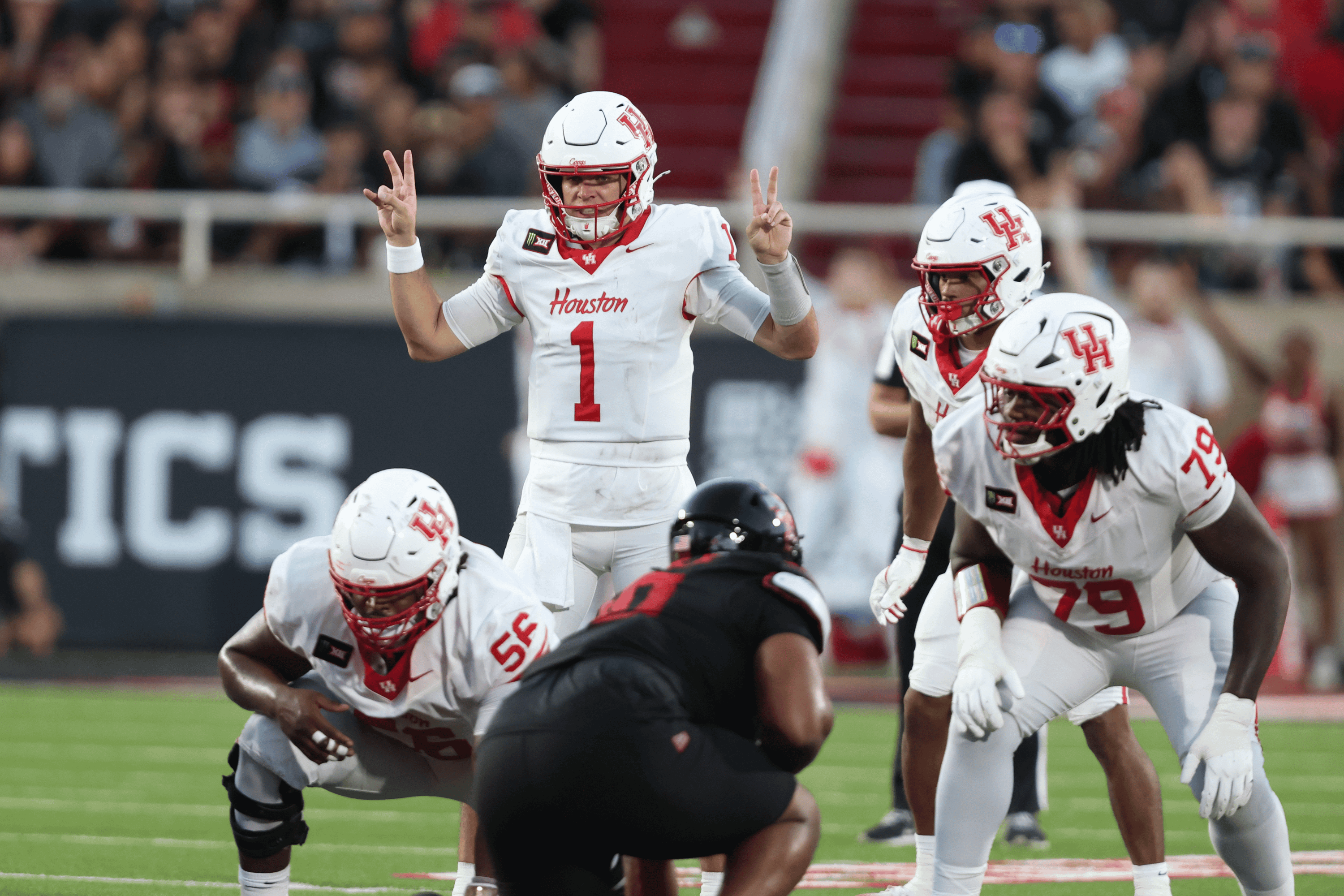

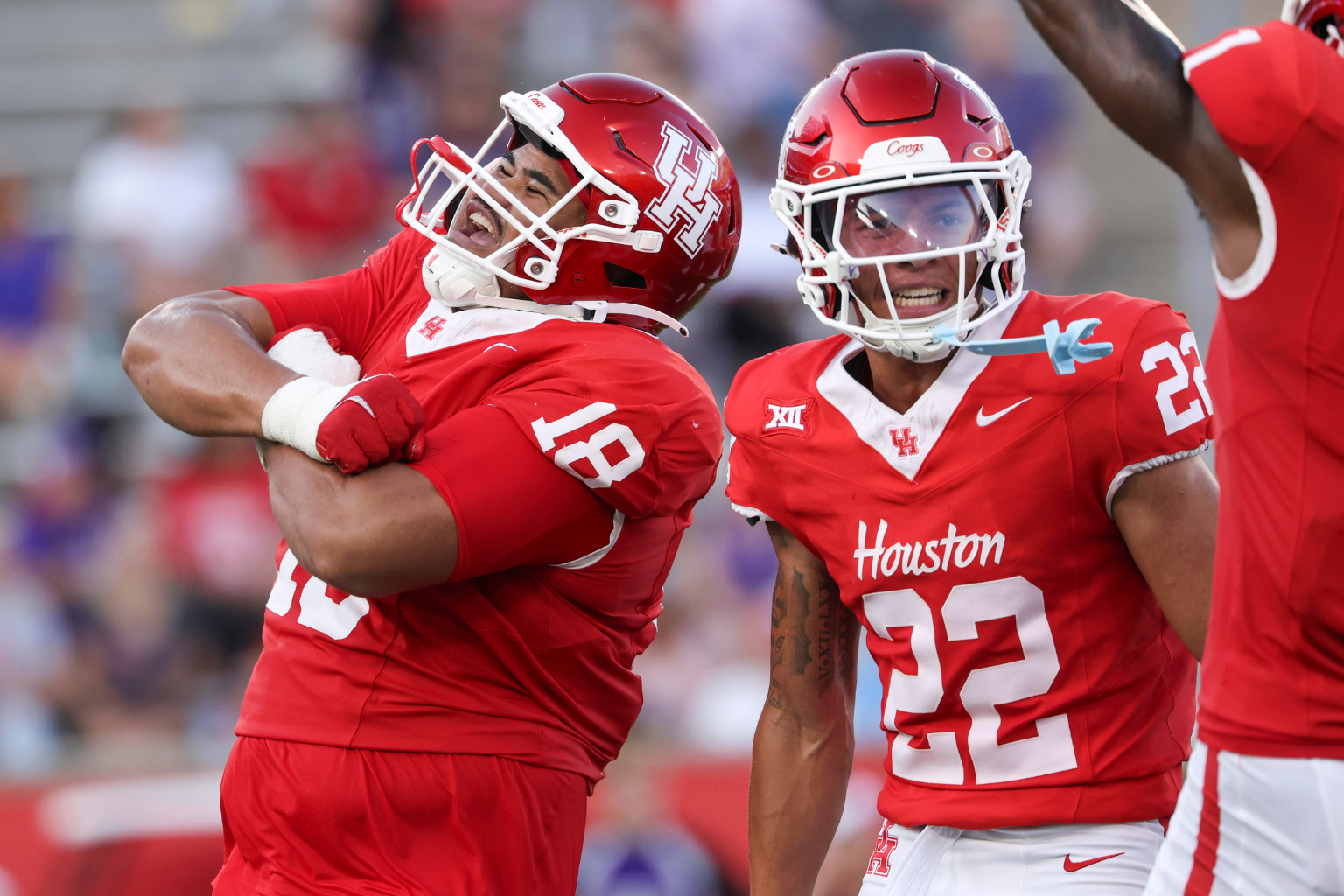
There is an old truth in football that never makes it onto a stat sheet: championships aren't won in the open field; they're forged in the trenches, one rep at a time, until the foundation can hold whatever gets stacked on top of it. Houston spent this offseason doing exactly that kind of work up front. We've already covered what Phil Steele's rankings had to say about the rebuilt offensive line. Now, with the Oregon State opener bearing down, it's the defensive front's turn to take its bow—and the trenches in Houston, it turns out, are drawing legitimate national attention on both sides of the ball.
Phil Steel ranked the top 68 defensive line rooms in the country, and the exercise is more than an offseason parlor game. A defensive front that can win one-on-ones, collapse pockets, and stone the run without needing help is the surest path through a College Football Playoff bracket, where possessions get scarce and margins get thin. The list of the nation's elite tells its own story about where power currently sits in the sport: of the top 10 defensive line units, four come from the Big Ten and four come from the SEC. Given that those two leagues have combined to win the last seven national championships, the concentration of talent up front is less a coincidence than a blueprint.
Ohio State sits at No. 1, and if that feels like it was already written before the ink dried, it should. Ryan Day's program simply reloads at a position most teams spend years trying to stabilize. A year ago, the Buckeyes returned zero starters up front and still held opponents to just 85 rushing yards per game — a number that borders on absurd for a "rebuilding" room. This fall, Kenyatta Jackson and Eddrick Houston headline a group that once again blends proven pieces with a wave of blue-chip additions, which is precisely how Columbus keeps its floor higher than most programs' ceiling.
Zoom out to the Big 12, and the standard-bearer is Texas Tech — no small detail for Houston, since Willie Fritz and company will travel to Lubbock to face the Red Raiders on Sept. 18. Beating the conference's top-ranked defensive front on the road would be as strong an early-season resume-builder as this team could ask for, and it will offer a real gauge of how far Houston's own rebuild in the trenches has come.
And Houston's rebuild has, in fact, arrived with some noise. The Cougars landed at No. 31 nationally—not top-10, but comfortably inside the sport's upper half and notably sandwiched between two SEC programs, No. 30 Florida and No. 32 Auburn. For a program still building its footing in a new conference, being mentioned in the same breath as SEC defensive fronts is exactly the kind of validation recruiting boards can't manufacture on their own.
Under the Hood: Who's in the Room
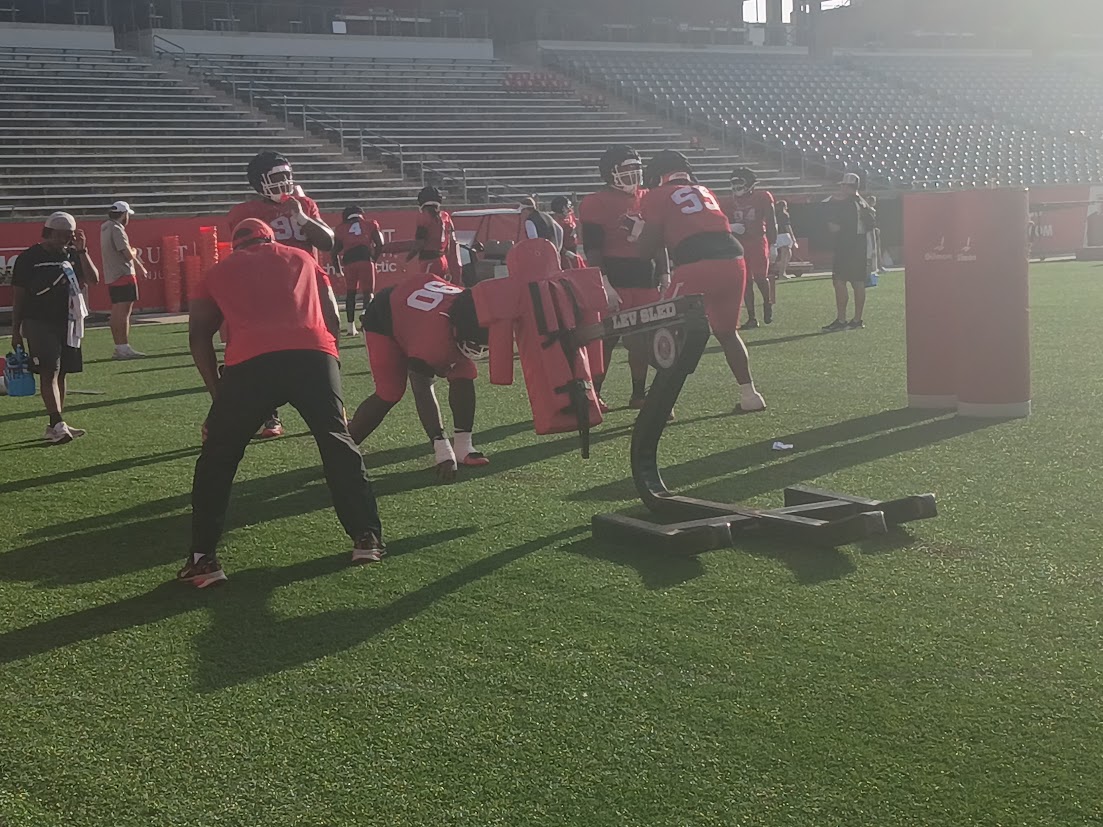
The ranking doesn't explain itself — the roster does. Last year's front was built around defensive tackle Carlos Allen and defensive end Eddie Walls III, both of whom graduated after productive senior seasons, and both of whom fit the exact mold Giles described: closer to 285-290 pounds, playing on speed and quickness rather than sheer mass. Replacing that production could have been a step back. Instead, Houston used it as an excuse to get bigger.
Defensive tackle Khalil Laufau is the returning anchor in the defensive trenches. Laufau led Houston's interior linemen with 35 tackles and two sacks in 2025, and he's flanked by edge rusher Brandon Mack, who returns after finishing second on the team with five sacks. Together they give the front a proven, productive core that didn't need to be replaced—only reinforced.
The reinforcements arrived via the transfer portal with serious size attached. Yale's Ejiro Egodogbare, a 6-foot-3, 310-pound defensive tackle and first-team All-Ivy selection in 2024, adds bulk to the interior after missing all of 2025 with injury. Fellow addition De'Marion Thomas brings a 6-foot-2, 340-pound frame to the same rotation, and Oregon transfer Ashton Porter—6-foot-3, 280 pounds, with 20 tackles and 2.5 tackles for loss a season ago—gives Houston a second legitimate pass-rush answer opposite Mack.
The result is a defense that returns six primary starters overall while adding real girth up front — precisely the kind of quiet reload Giles was describing without needing to spell it out. Houston's defense finished 2024 ranked among the nation's top 40 units, but the run defense was the soft spot, showing up in losses to Texas Tech and West Virginia and in a season-opening overtime scare against this very same Oregon State team. More size inside is Houston's direct answer to that problem. Saturday is the first real test of whether it worked.
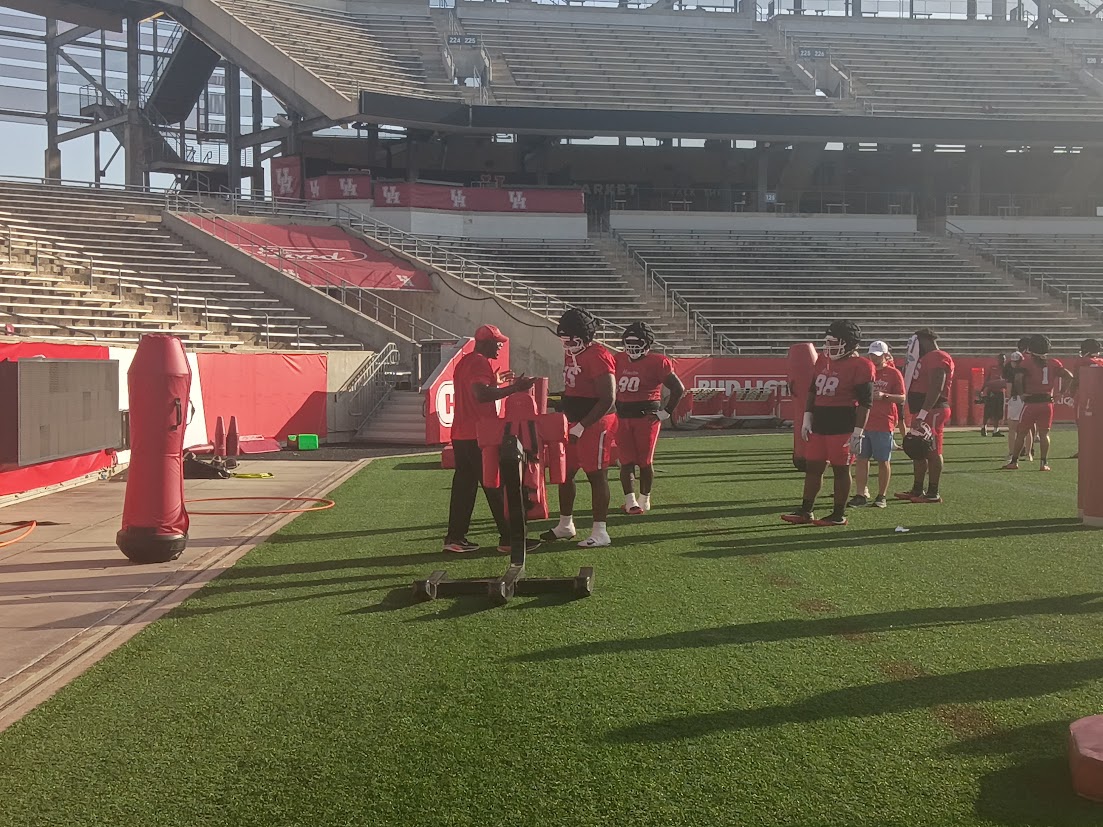
Ask the man responsible for that front, and the story isn't about a sudden influx of five-star bodies. It's about maximizing what's already in the building. Houston defensive line coach Oscar Giles broke down the evolution of his room this way on Saturday:
"It's not as different as it has been in the past. Last year we had guys like Carlos and Khalil, both approaching about 285 and 290. The thing they didn't have as far as girth—they had speed and quickness. And so I give a lot of credit to Coach Armstrong. He takes what we have, and he tries to find a way to get the best out of those guys. And I'm just trying to be like the carpenter and say, "Sharpen the skills up and try to help them be the best they can be."
It's a telling line, and not just for the humility in it. The coach Armstrong he credits is defensive coordinator Austin Armstrong, and the tribute matters. Giles isn't describing a room that got bigger so much as a room that got sharper—speed and quickness refined into technique and technique refined into production.
Carpenters don't build with raw lumber; they measure, they cut, and they sand the edges until the pieces fit. That's the version of the Houston defensive front that shows up against Oregon State: not the biggest room in the country, not yet, but one that has been deliberately shaped into something that plays bigger than its measurables.
None of this guarantees Houston contends for a playoff spot this season. Rankings are snapshots, not prophecies, and the games ahead starting Saturday and intensifying the moment the bus rolls into Lubbock will do the real talking. But a program that finished the offseason with a top-40 offensive line and a top-35 defensive front, flanked in the rankings by SEC programs instead of trailing them, has given itself a foundation. And in this sport, foundations are usually the difference between a team that competes in November and one that's already watching from home.
The trenches are set. Now it's time to see what Houston builds on top of them.