
There is a distinct, unyielding gravity to September football when it moves away from the neon-lit amphitheaters of major conference powerhouses and settles into the damp, low-country heat of Bulloch County.
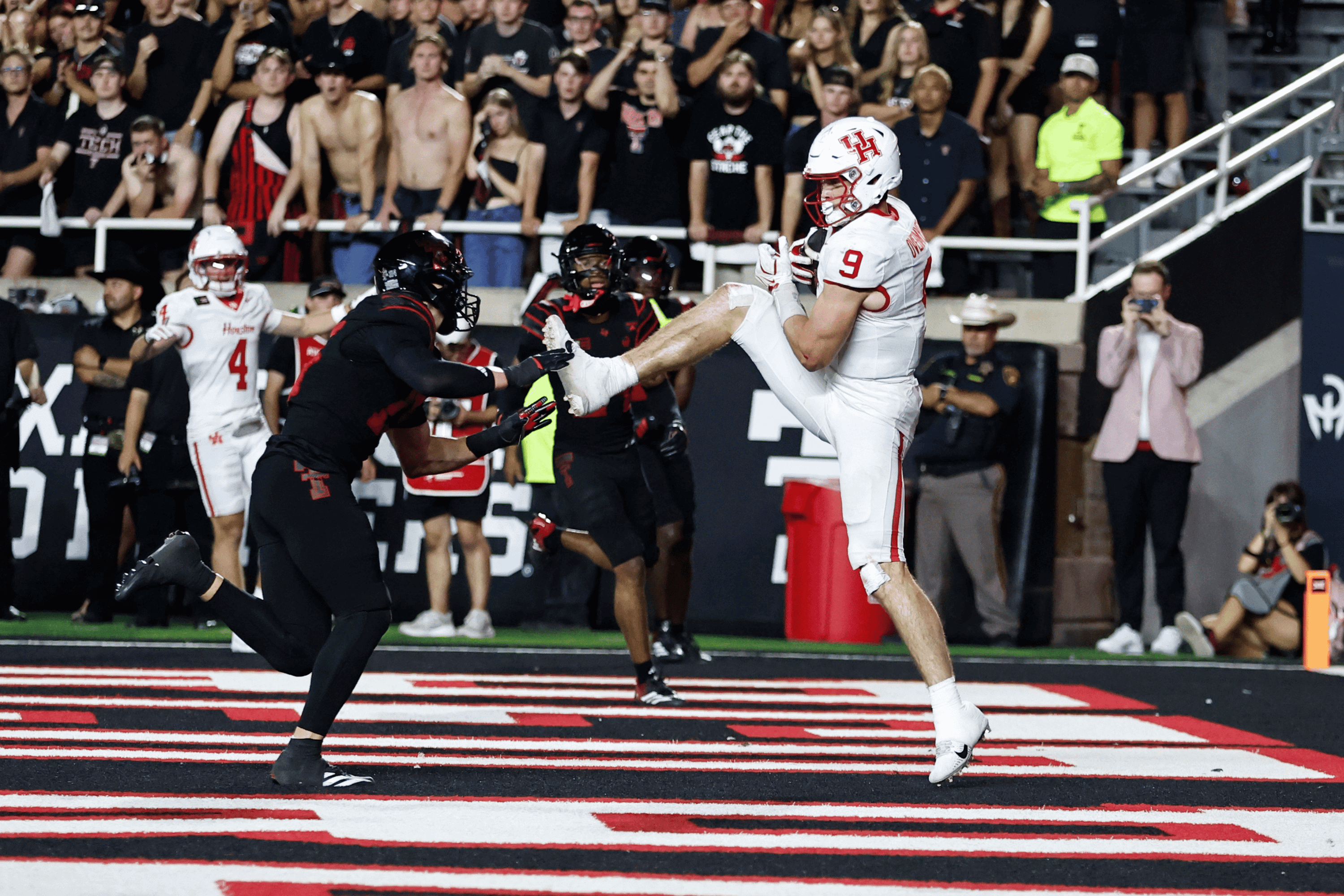
Allen E. Paulson Stadium does not care about national rankings, conference realignment, or the lingering emotional residue of a heartbreaking two-point road loss in West Texas. When No. 25 Houston touches down to face Georgia Southern, the standard narrative will try to paint this as a quiet recovery afternoon—a straightforward, logistical layover before the relentless machinery of the Big 12 schedule demands full attention once more.
That perspective belongs to people who evaluate the sport from computer screens, safely insulated from the raw, unpredictable physics of a true road ambush. History is littered with the wreckage of ranked teams that stumbled off a tough loss only to walk blindly into an environment designed to amplify every hidden vulnerability.
The Architecture of the Trap
Let's strip away the surface mathematics. Conner Weigman can spin it with the best signal-callers in the country, and Houston's offense possesses the explosive geometry to stress any defense. But a football team's true character is never accurately measured when comfortably dictating terms on its own turf.
It is tested three states away on a humid afternoon, when the opposition operates with absolute freedom, backed by a crowd that treats every visiting helmet as an immediate threat.
In the microscopic margins of college football, a narrow defeat leaves behind invisible fractures. If the Cougars treat Georgia Southern as a simple pit stop to pad their numbers or heal their wounds, they misread the core reality of autumn: teams with nothing to lose are inherently dangerous, and environments that celebrate blue-collar grit will expose any lack of internal insulation.
The challenge for Houston isn't about out-scheming an opponent on paper. It is about waging an internal war against human nature — the quiet, insidious urge to exhale after a draining emotional peak.
By the Numbers: A Deeper Read on the Matchup
Strip away the mood and the matchup still tilts toward Houston on paper, but the margins are tighter than a No. 25 ranking suggests, and several underlying numbers explain why this trip carries more risk than the seeding implies.
Scoring balance. Houston enters averaging 29.1 points per game against 22.8 allowed; Georgia Southern is averaging 27.9 points per game while surrendering 32.3. On the surface that's a favorable gap for the Cougars, but it also means the Eagles have shown they can move the ball against anyone — the problem has been stopping people, not scoring on them.
The rushing-defense soft spot. Georgia Southern is allowing 218.1 rushing yards per game, nearly 90 yards worse than Houston's own defense surrenders. That's the single biggest exploitable number on the board, and it argues Houston's path to control isn't just through Weigman's arm — it's through the ground game establishing tempo early and often.
Turnover generation. Houston forced 17 fumbles a season ago, third-most nationally, and piled up 16 sacks specifically on first down — third-most in the country. That's not incidental; it's a program built on winning first-down collisions and turning hesitation into takeaways, which matters enormously against a quarterback still building chemistry with a new receiving corps.
Georgia Southern's third-down fragility. On third-and-7-to-10 last season, the Eagles completed just 29.4% of their passes — the lowest rate of any team in the country in that situation. If Houston's front seven can force second- and third-and-long without over-pursuing, history says the Eagles' offense stalls exactly there.
Max Johnson's unfamiliar seat. Georgia Southern's grad-transfer quarterback arrives with a well-traveled résumé — LSU, Texas A&M, North Carolina — but limited game reps over the past two seasons after injury and a backup role sidelined him. He looked sharp in a season-opening rout of an FCS opponent, but Houston represents the first real Power Conference test of his new offense, on his new team, in front of a home crowd expecting him to deliver.
Weigman's dual-threat weight. A year ago, Weigman finished as one of only four FBS quarterbacks with 25-plus passing touchdowns and double-digit rushing touchdowns, and his ground production — 700 yards, 11 scores — led the Big 12 outright. That dimension is precisely what strains a defense that already leaks nearly 220 rushing yards a game; contain schemes built solely around the pass will not survive first contact.
The market's read. Oddsmakers see it the same way the box score does: Houston opened as roughly an 18-point favorite (lines have ranged from -17.5 to -19 across books), with the total sitting near 55 points. A number that lopsided is exactly the kind of spread that invites complacency — and exactly the kind that a scrappy, nothing-to-lose home team has covered before.
None of that erases the trap-game risk. It sharpens it. Houston has the tools to make this lopsided by the numbers — but the numbers also explain exactly how a team with "nothing to lose" could keep it a one-score game into the fourth quarter if the Cougars arrive anything less than locked in.
Tactical Focus: Neutralizing Georgia Southern's Tempo
To ensure the environment doesn't dictate the afternoon, the most critical tactical adjustment for Houston's front seven is strict gap discipline paired with interior pocket compression.
Johnson's résumé spans three different programs, and that mileage shows up in how he'll try to unravel a defense: quick-rhythm reads, plays designed to stretch the field horizontally, and pre-snap motion meant to bait linebackers and edge defenders away from their run fits. Houston's front seven has to resist the temptation to freelance for a highlight-reel sack. Every undisciplined rush upfield leaves a crease behind it, and a team playing with house money needs only one of those creases to turn a three-and-out into a drive that eats the clock and the crowd's patience with it.
The prescription isn't reckless penetration; it's about coordinated suffocation. By collapsing the pocket from the inside out, the front seven can disrupt Johnson's timing without over-pursuing, forcing early checkdowns and winning the first-down collisions necessary to quiet the Paulson Stadium crowd before it becomes a factor. The data backs the theory: Houston's first-down sack production last season was elite, and an offense that struggles on third-and-long the way Georgia Southern did in 2025 is an offense that can be strangled before it ever finds rhythm.
When the opening whistle sounds under the Georgia pines, the scoreboard won't care about projections, and the red clay won't care about last week's box score. The only thing that will dictate survival is whether Houston treats every snap as a referendum on its own standard. Kick-off for the Coogs is set for 4PM ET live on ESPNU.