
Somewhere in the foothills of the Wasatch Mountains on Saturday night, a center will press his knuckles into the cold turf, wait for a silent count, and fire a football backward into a storm.
Nobody will notice. That is both the beauty and the injustice of the job.
The ball travels barely a yard between his knees, and by the time it reaches the quarterback’s hands, 300 pounds of bad intentions have already tried to occupy the space where the play is supposed to live.
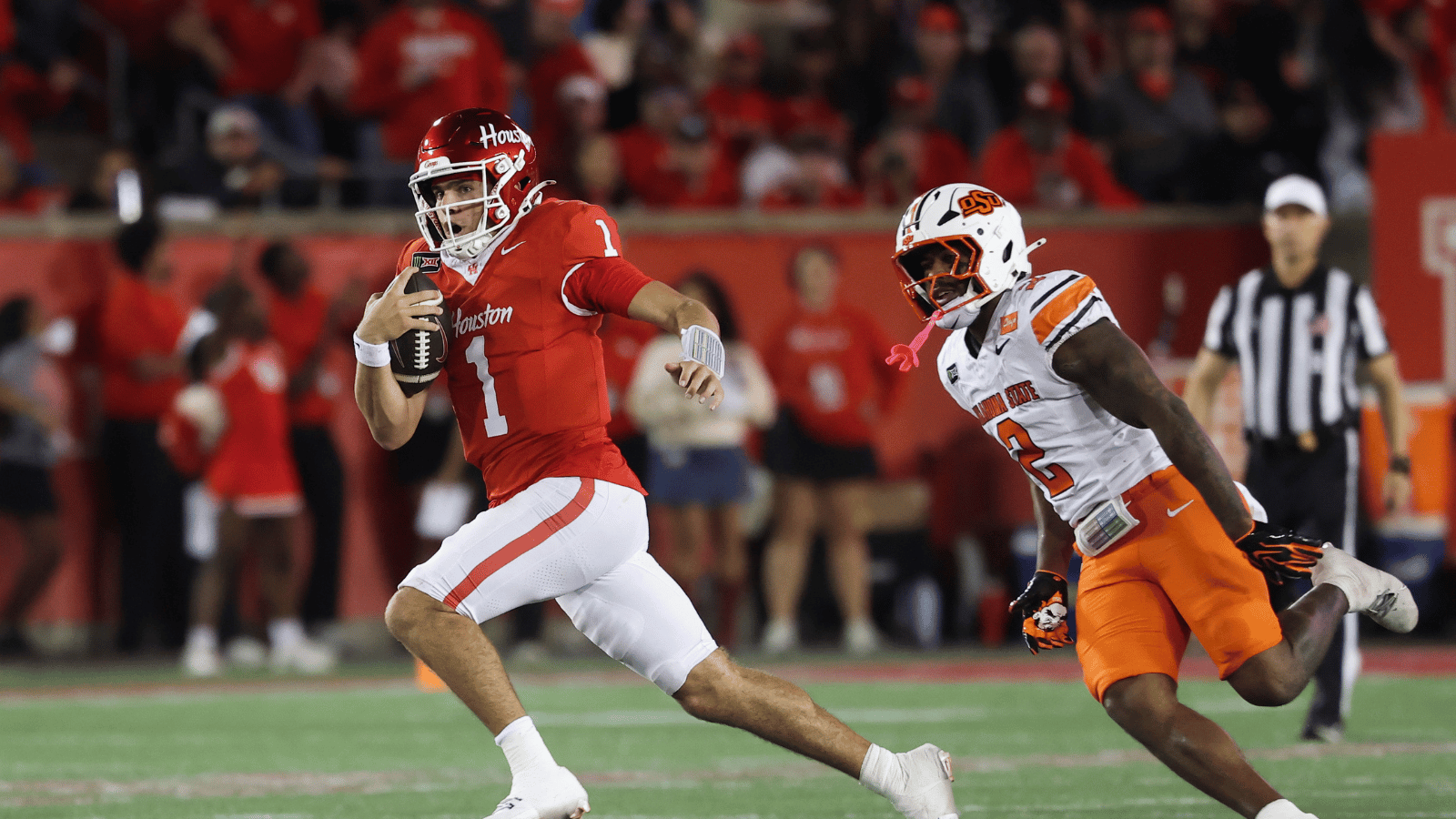
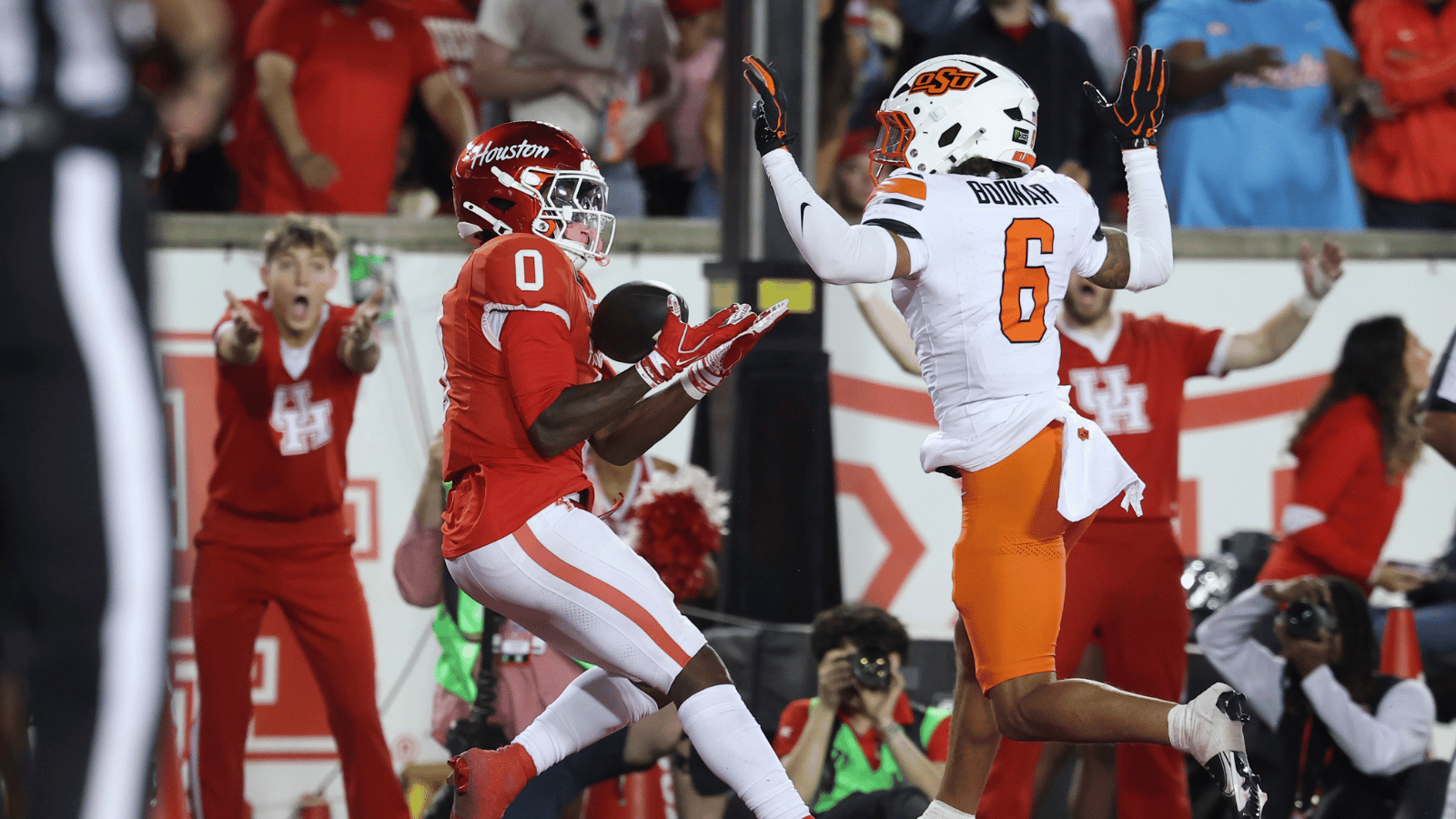
The circus comes to Salt Lake City this weekend as No. 14 Houston (6-1) marches into Rice-Eccles Stadium to face unbeaten, 10th-ranked Utah (6-0) with the inside track to the Big 12 Championship—and a College Football Playoff berth—hanging in the balance. College GameDay will build its stage in the morning, ESPN will roll the cameras at 10:15 p.m. ET, and the studio analysts will spend 12 hours falling in love with the glamorous positions. They will talk about Conner Weigman (1,771 yards, 20 touchdowns, two interceptions) and Devon Dampier (1,412 yards, 15 touchdowns, 68.6% completion rate), about deep shots to Amare Thomas and Braden Pegan, and highlight-reel catches under the mountain lights.
But football this deep into October is not settled in the light. It is settled in the dark interior, two feet from the football, by men who will wake up Sunday morning unable to close their fists.
This is a meeting of two programs that have declined, politely and stubbornly, to bend with the times. While the rest of college football drifts toward the perimeter—chasing space, tempo, and a game that resembles a track meet with a scoreboard—head coach Morgan Scalley’s Utah program still preaches its old-school gospel of a "relentless, smart, nasty" defense that surrenders just 14.8 points per game (12th nationally). Houston, under Willie Fritz, still measures its soul in yards after contact and the shade of a lineman's knuckles.
Both are the kind of teams whose hands stay purple until December.
A rush-hour negotiation in the trenches
Forget the wide-angle television view for a moment and picture the line of scrimmage as a crowded subway car at rush hour. Nobody yields an inch of floor. Every shove is a negotiation; every dip of a shoulder is a sharp argument about who boarded first. The sweat is real, the black rubber pellets stay in your socks until Tuesday, and the sound—that wet, heavy thud of pad meeting pad—is the closest thing the sport has to a heartbeat.
For once, the numbers are honest about the violence, and they read like an uncanny mirror image:
Total Output: Utah ranks ninth nationally in total offense (486.5 yards per game); Houston sits directly behind them at 10th (485.1). Utah averages 40.2 points (eighth); Houston posts 39.3 (12th).
The Ground Attack: Houston rushes for 220.3 yards a game (16th in the FBS) behind workhorse Makhi Hughes (464 yards); Utah rushes for 220.2 (18th) behind Wayshawn Parker (597 yards, seven touchdowns).
The Wall: Utah surrenders just 88.7 yards on the ground (12th); Houston allows a stingy 82.6 (sixth).
Two immovable objects have been aimed directly at one another, and somebody’s knees are going to file a grievance.
Where the two programs truly suffocate opponents is in the slow bleed. Houston converts 61.4% of its third downs—first in the country—while Utah isn't far behind at 53.2% (eighth). That is less a statistic than a four-quarter hostage situation. And while Utah’s run defense has been elite on paper, the Utes have done it with a defensive front rebuilt nearly from scratch after losing every starting lineman from a year ago.
A young front is a front that has not yet been lied to enough. Late last season, Kansas State and Kansas found that out in Salt Lake City, gashing the Utes when the fourth quarter got heavy.
Houston’s offensive line is built to tell those lies. Named to the Joe Moore Award Midseason Honor Roll last week, the unit—Drew Terrill, Shadre Hurst, Anthony Boswell, McKenzie Agnello, and Alvin Ebosele, with Ronnell McLain answering the bell in spot duty—has allowed the second-fewest tackles for loss in the nation.
They don't just survive; they grade out as elite, sitting third nationally in both Pro Football Focus overall offensive grade (84.0) and run blocking (85.2). Four of the Big 12’s 10 highest-graded linemen wear Houston red, led by Boswell and Hurst sitting at No. 1 and No. 2.
The geometry of the two-step lie
This is where the sport’s oldest truth earns its keep. Games at this altitude go to the team that can run its base plays against the opponent's best look without flinching, without a panic audible, and without checking out of the call just because the box looks heavy. It is execution under duress. The play practiced 200 times on a quiet Wednesday has to work on the 201st, with a tackle’s ankle throbbing and 50,000 strangers screaming down the back of his neck.
For Houston, that is the whole architecture. Gap integrity is Utah’s religion; every defender owns a crease, and the offense’s job is to make him choose between two. That battle will be fiercest inside the 20-yard line, where a shaky Houston red-zone offense (84.6%, 75th nationally) has to solve Utah’s 15th-ranked red-zone defense (71.4%).
The chess match lives in the first two steps. Houston can show Inside Duo—two violent double-teams and a back falling forward—and then marry that exact same front-side footwork to Counter, pulling the guard around the corner. When that right guard is Agnello, graded by Pro Football Network at 93.2 (second-best in the country), the lie becomes terribly convincing.
That pulling guard is the middle linebacker’s dilemma. Flow hard with Agnello, and the A-gap you just vacated opens behind you like an unlocked door for the cutback. Stay home, and you surrender the edge. Both answers are right until the ball is snapped, and then one of them is fatally wrong.
Before the snap, Fritz makes the math even harder. Motion tight end Patrick Overmyer across the formation, a Utah linebacker has roughly one second to count hats, communicate, and rotate his gap fit. In the half-second he spends doing arithmetic, the center has already fired the ball into the storm.
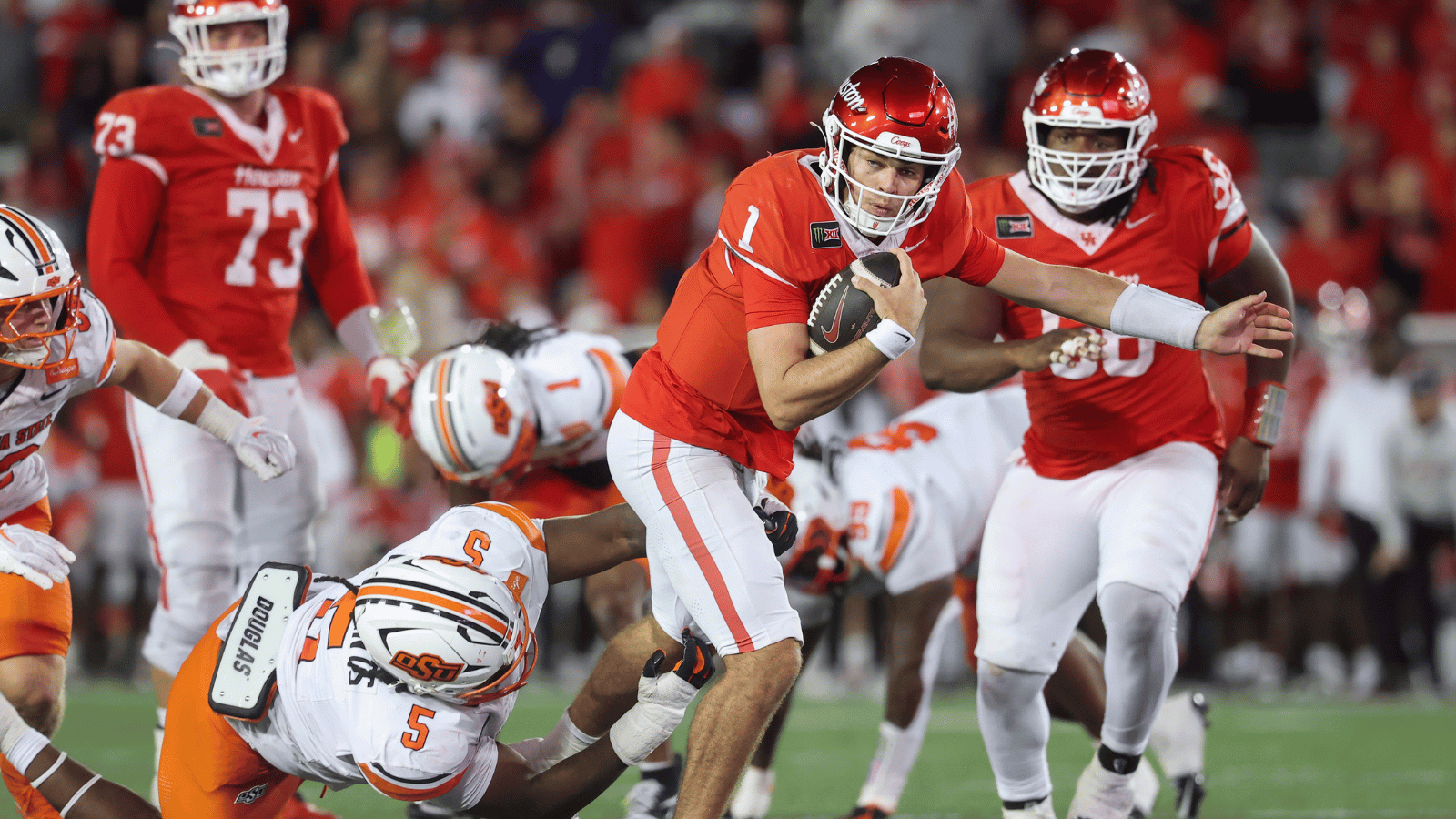
That center is Boswell, and Saturday’s war runs directly through his tape-wrapped fingers. In last week's 35-32 win over Oklahoma State, Boswell spearheaded the protection that gave Weigman a career night (343 passing yards, 52 rushing yards, and five touchdowns), earning an 83.6 pass-block grade. For the season, Boswell ranks as PFF's highest-graded center in college football (88.1 overall) and leads all workhorse centers with an 87.5 pass-blocking mark. A pivot who can make the line call, win the snap, and anchor against a heavy nose tackle is the exact kind of fulcrum championship football requires.
That is the orthopedics of the thing: leverage measured in fractions, pad level decided by two inches of hip sink, a punch landed inside the breastplate instead of outside the shoulder. Football is a game of geometry, and the angles are enforced with elbows.
Why the clock is Houston's best cornerback
For Houston, winning that geometry isn't a luxury; it is survival.
The Cougars rank 129th nationally in pass defense, surrendering 265.0 yards a game through the air, while Utah hangs 40.2 points a night on the scoreboard and averages 266.3 yards passing. There is only one antidote to an offense that explosive, and it is a running clock. Both sidelines know it: Utah ranks eighth in the country in time of possession (33:38), and Houston sits right on their heels at ninth (33:34). Both protect the football with religious devotion, with Houston boasting a +5 turnover margin (15th) to Utah's +4 (22nd).
A 12-play Houston drive that chews up seven minutes of game time is the best pass defense Fritz has. Win the line of scrimmage, and Dampier spends his Saturday night in a heavy parka on the bench. Lose it, and the Cougars are chasing a track meet they aren't built to win.
Oddsmakers and algorithms don't give the visitors much breathing room. Utah opened as a 6.5-point favorite (sitting 5-1 against the spread), and ESPN’s matchup predictor hands the Utes a 67.1% chance to protect their home turf, leaving Houston with a 32.9% puncher's chance.
I still like the team with the calluses. While Utah survived a 27-24 scare against Colorado last week in which Dampier was baited into two interceptions, the Cougars have been the hottest outfit in the Big 12 this month—going into Manhattan to take down Kansas State before outlasting Oklahoma State in front of a home crowd still shaking off the hangover of the last miracle. Houston never looks completely comfortable and never stops winning, which is precisely how a team with bruised hands tends to operate.
Long after the television trucks pack their cables and GameDay folds its signs, long after somebody receives a trophy or a hard lesson, a center in a quiet locker room will press an ice bag to a swollen wrist and stare at a clock that says it’s already Sunday. He won't be in the highlights. He never is. He’ll just know, in his hands, who won.