
I spent a lot of nights in the 2010s watching Kentucky's press swallow people whole. That's the honest starting point here, because it's the reason a coaching hire at a 5-25 program mattered more to me than most coaching hires do. Matthew Mitchell's Wildcats didn't just play good defense; they made "40 Minutes of Dread" a physical fact for whoever was standing across from them. Full-court pressure from tip to horn.
Live-ball turnovers that turned a 10-point Kentucky lead into a 40-point one before halftime ended. The game people still bring up is the 92-24 win over Jackson State: 37 turnovers were forced, and the other team was held to something like 15 percent shooting for 40 straight minutes. That wasn't the outlier season. That was a Tuesday.
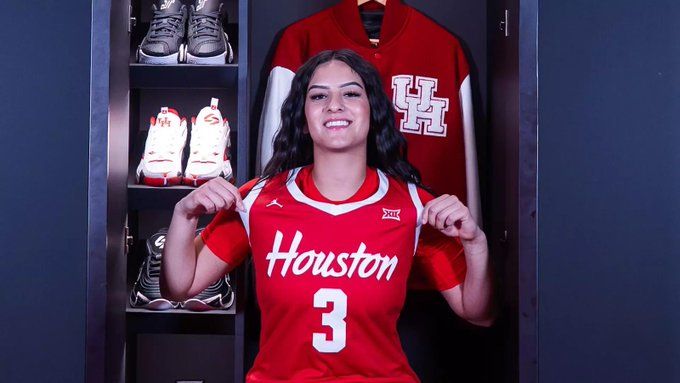
So when Mitchell left that Kentucky legacy behind and took over at Houston last year, inheriting a team that had just gone 5-25, I paid more attention to the hire than the record probably justified. Now, watching Giaunni Rogers work through her recruitment, I think it's about to matter to somebody else, too.
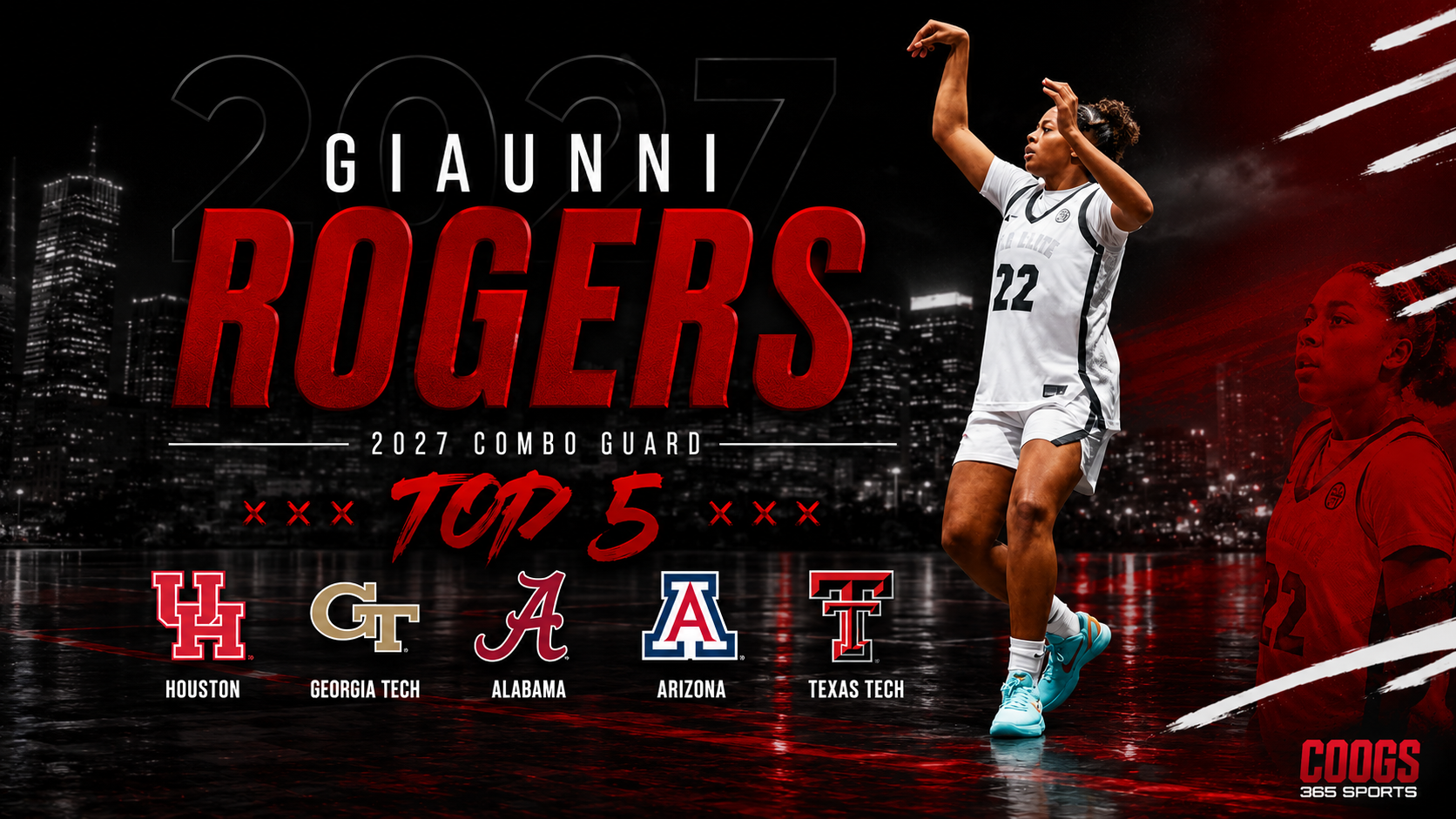
Rogers spent her July the way every top-tier 2027 prospect does: gym after gym, EYBL stop after EYBL stop, a different row of college coaches in the bleachers every weekend. By the time it was over, "highly recruited" had turned into something a lot more specific for the HER Elite rising star. This week she cut her list to five: Houston, Georgia Tech, Alabama, Arizona, and Texas Tech.
Start with the player, because none of this matters if the player isn't real. Rogers is a 5-9 combo guard out of Alpharetta (Ga.) St. Francis, who doesn't really have one position, will bring the ball up one possession and then spot up in the corner the next.
https://twitter.com/GiaunniRogers/status/2014081980141387992?s=20
She gets downhill and finishes through contact instead of settling for the floater. She's the kind of defender who makes the other team's best guard visibly uncomfortable. What shows up most on tape isn't a single highlight; it's the reads. She rarely forces something the defense isn't giving her.
What's left to build is what's left to build for most sixteen-year-olds: the jumper needs to go from occasional to automatic, and she'll need more strength before she's checking grown women instead of high schoolers. Normal stuff, for a junior this good.
Rogers backs up what the tape shows. From film to the hardwood, she's lethal in just about every facet of the game, so when she's asked to describe her own game, she doesn't have to oversell it; she can just point to the film.
She's heading into the key stretch of her recruitment now, and a big reason these five programs are still standing is opportunity. None of them are treating her like just another talented name who might pan out down the road. They're willing to hand a true freshman a real role the moment she steps on campus. That's the filter. Every school still on her list had to clear it.
Alabama clears it the easy way. Kristy Curry has the Tide in the middle of one of the steadiest stretches in program history, coming off a 24-11 season and a second-round NCAA trip.
Georgia Tech clears it with geography and a clean slate for Karen Blair, a year into the job, inheriting a program Nell Fortner left in good shape.
Arizona is the wild card: Becky Burke built a WNIT champion at Buffalo before taking over a Wildcats program still chasing the Final Four level it reached a few years back, and her first season in Tucson was rough.
Texas Tech is riding the best heat of anyone on the list; Krista Gerlich just won Big 12 Coach of the Year off a 26-8 season, the program's best finish in more than two decades.
Then there's Houston. 7-23 in year one under Mitchell. Worst record on the list, and it isn't particularly close.
But I already told you what I know about this coach. Strip away the scoreboard and look at what that Kentucky identity actually produced over 13 years: the winningest women's basketball coach in program history, with 303 wins, three SEC Coach of the Year awards, five SEC Players of the Year, 21 All-SEC selections, and six players drafted into the WNBA, one of them the No. 1 overall pick.
That's not a coach who occasionally lands a good guard. That's a coach whose entire career has been built on finding versatile, competitive backcourt players and turning them into something. The press I watched for a decade wasn't just a scheme. It was a guard factory.
That's the identity he's now trying to rebuild from scratch in Houston, and rebuilds are the one situation where "believe in your freshmen" stops being a recruiting line and starts being the only option on the table.
Houston doesn't have a deep veteran group to hide a young guard behind. It needs players who can defend the way Mitchell's system demands and initiate offense right away, which is almost specifically the player Rogers already is. A 5-9 combo guard with length, on-ball pressure, and the ball-handling to run an attack isn't a nice theoretical fit for a Mitchell defense. It's the prototype.
None of this guarantees Rogers ends up here in Houston. Alabama's stability is real. Texas Tech's momentum is real. So is the pull of playing close to home. But if the question is which program on this list is structurally built around exactly what Rogers does best, the answer isn't the one with the shiniest recent record.
It's the one that doesn't have any choice but to hand her the keys, coached by the same guy whose defense I used to watch turn 40 minutes into a slow-motion demolition, long before any of this mattered to Houston at all.