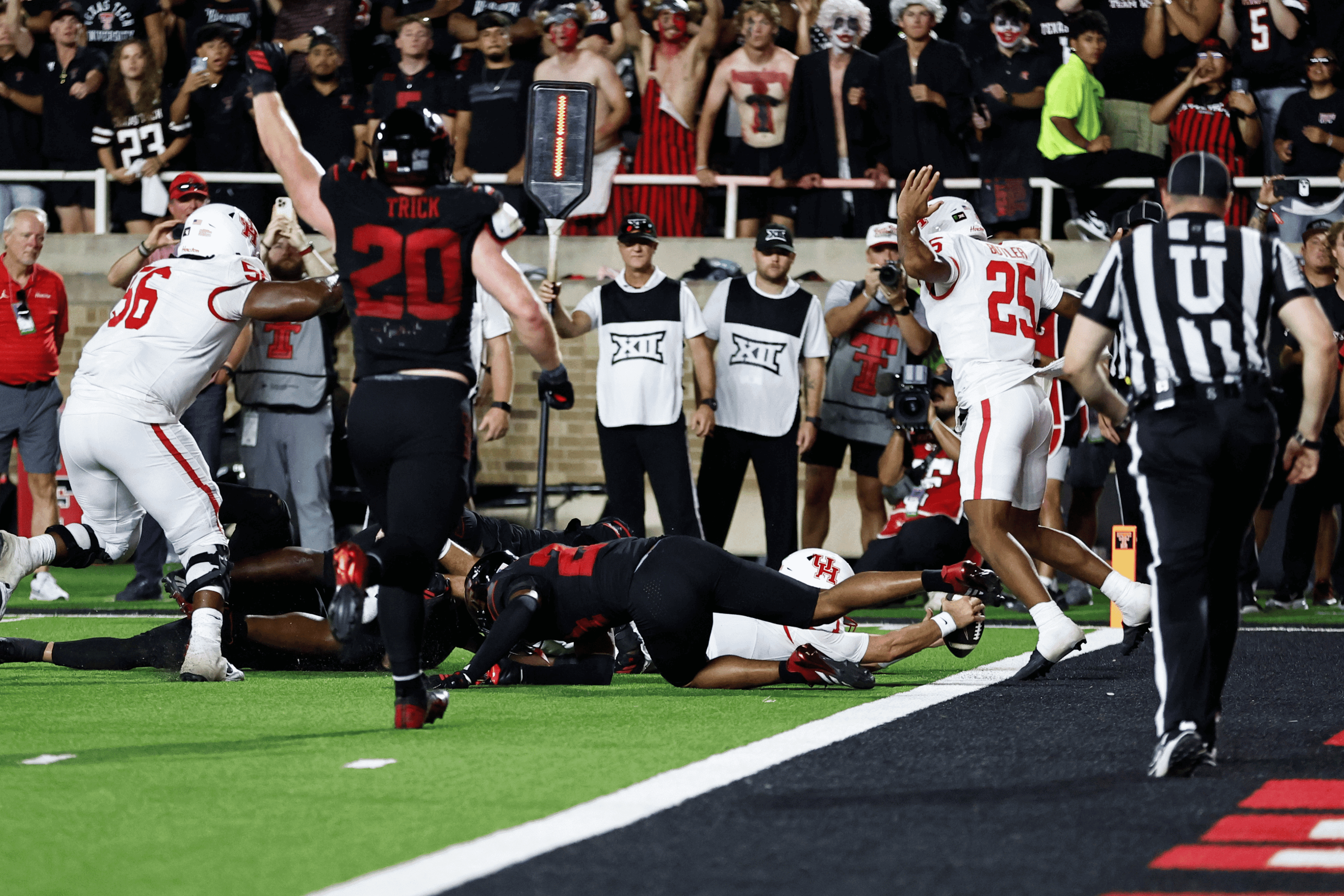

I've heard it for so many seasons in the SEC, going back to my time around Ole Miss: a team convinces itself it needs to make a statement instead of just needing to win. Rat poison, what we always called it. That's the exact setup facing No. 22 Houston as it walks into this Big 12 opener on the road at No. 13 Texas Tech, a team that's won seven straight in this series and beat them 35-11 the last time out. The instinct is to go find something explosive, something loud enough to erase last October. Feed a team enough of that, and some of them start believing it. That's usually when you lose.
I'd tell Willie Fritz's team something different. Houston doesn't need its best football Friday night. It needs its most boring football. Boring doesn't have to be uneventful.
Big games can often convince players they have to be the one who makes the play that flips the game, and that is important to a degree, but that's not what wins football. What wins is the team that makes the fewest stupid ones. It's not what a team is capable of on its best play. It's what it does, snap after snap, on the plays nobody remembers.
That's the process. Not the scoreboard, not the spread, not last October. Just one sound, boring play stacked on the next one until there are sixty minutes of them and you've won.
I'm watching this one like an analyst watches tape, not like media. Five things decide it, snap to whistle.
First-down efficiency. Eyes on the landmark, not the hole. A four- or five-yard gain that stays on schedule beats a home-run shot that leaves you in second-and-11. Stay ahead of the chains, and you dictate the series. Fall behind it and you're playing into a front built to pin its ears back.
Zero-yard plays instead of negative plays. I don't need every play to gain yardage. I need it to not lose any. A checkdown for no gain costs nothing. A sack, or a ball forced into a leveraged window, costs the series. That's feet and eyes and discipline—it has nothing to do with talent.
Tackling after the catch. Break down, wrap with the near arm, and drive. Explosive plays against a front this talented rarely come from one blown coverage. They come from six extra yards after the catch, over and over, because nobody finished on first contact.
Field position. Hang time. A gunner winning his release. A returner disciplined enough to fair-catch instead of forcing it from his own 12. Flip the field once and you've done more for a defense than a sack does.
Weigman knows when a snap is simply over. The most valuable thing a veteran quarterback brings isn't arm talent. It's climbing the pocket, resetting his feet, and recognizing a leveraged window downfield isn't a live throw anymore. Quarterbacks don't lose these games by making bad decisions. They lose them not recognizing the play is dead and trying to make something happen anyway.
Every team on that field Friday faces circumstance. Nobody chooses that. What they choose is how they respond to it, play to play. That's on the players—not the circumstance and not the number in Vegas. Ignore the poison. Play the boring version of football. That's how you go on the road and beat a team that's better than you on paper, and one thing Fritz and his ball club have shown is they know how to adapt and adjust even in hostile road environments.
If Houston walks out of Lubbock Friday night having made football look remarkably ordinary, we'll know something extraordinary about Willie Fritz's program.