
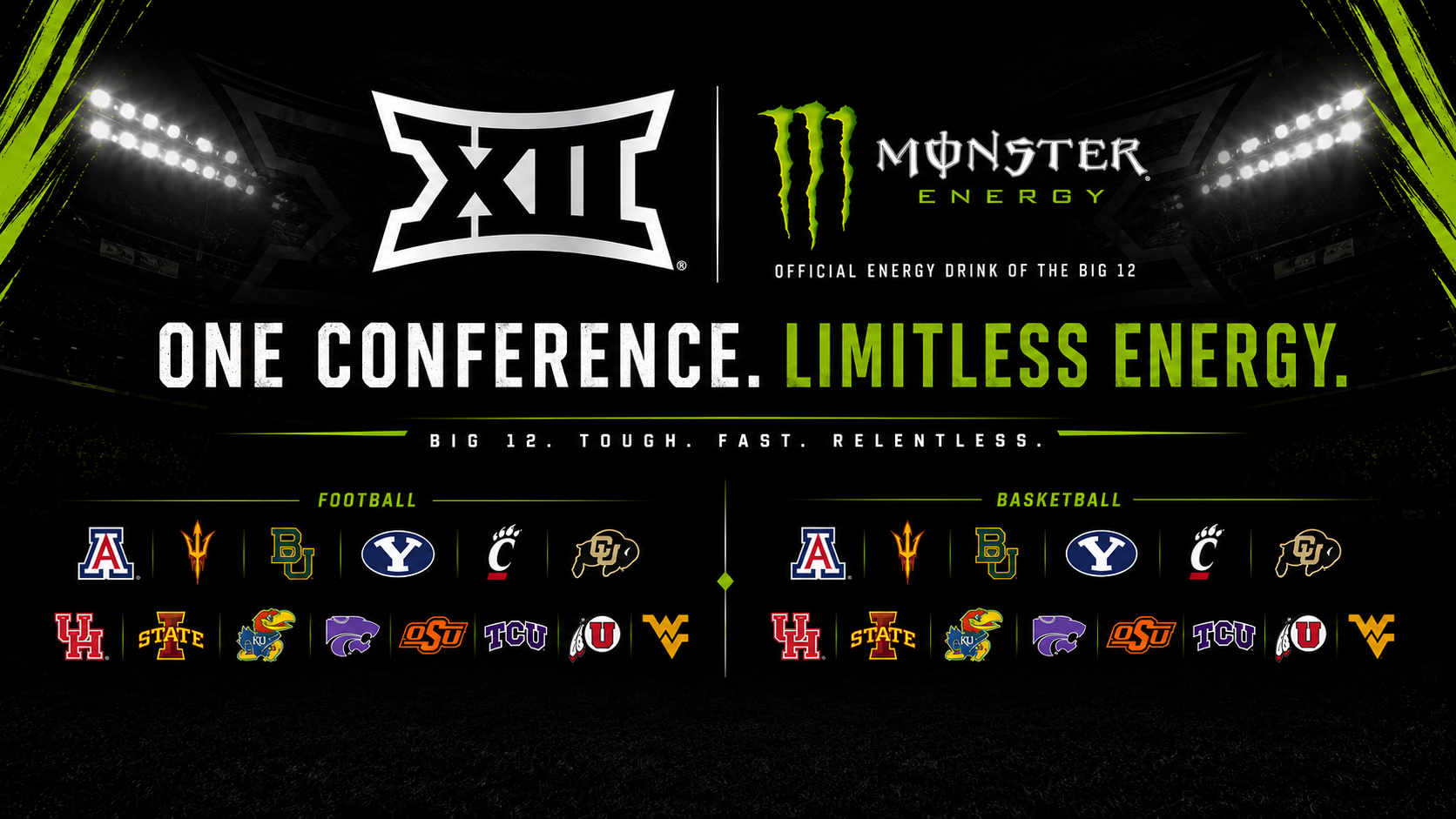
By the time the Cougars kick off Year 3 under Willie Fritz this fall, there will be a new logo on the turf at TDECU Stadium and a new patch on the jersey: a co-branded Big 12/Monster Energy mark, part of the conference-wide deal Brett Yormark announced this week worth roughly $20 million a year. The league itself is getting rebranded around it, "Monster Energy Big 12 Football" will be stamped across every conference broadcast and social post starting this season.
Yormark sold the deal in sweeping terms. "This is an important partnership for the Big 12," he said in Tuesday's written statement, tying it to the conference's push to grow its commercial business on a national scale. A day later, at the podium in Frisco, he went bigger still, promising the tie-up will "take this conference to places it's not been before." That's commissioner talk—built for fourteen-plus schools at once.
For Houston, strip away that language, and the number that actually matters is smaller and more specific: about $1 million a year, the school's expected cut, per the Sports Business Journal. For a program like Oklahoma State, that's a rounding error next to nine-figure media deals and booster networks decades in the making. For Houston, it carries more weight than that.
Reporting this year has made clear where Houston actually sits financially: dead last in the Big 12 and the lowest-funded athletic department in the entire Power Four, still working to climb into the middle of the pack on NIL.
Fritz has said closing that gap is now as much a part of his job as game planning, and he and his wife made an undisclosed personal donation to the athletic department this offseason the kind of gesture usually associated with a booster, not the head coach.
Put the Monster Energy money next to that backdrop, and the comparison gets almost absurd. Houston's entire annual cut of the biggest sponsorship deal in Big 12 history is roughly equal to the individual market value of one player. Five-star freshman quarterback Keisean Henderson, the highest-rated recruit in program history, already carries a $1 million NIL evaluation on his own. One recruit. One conference check. Same number.
That's not a knock on the deal so much as a snapshot of where Houston stands. On the field, the program looks nothing like a have-not. The Cougars are coming off the best season of the Fritz era—10 wins and a Texas Bowl blowout of LSU—and return a dozen starters, including quarterback Conner Weigman with Henderson developing behind him.
Athlon picked Houston to finish third in the Big 12 this fall, behind only Texas Tech and BYU, and the September 18 trip to Lubbock already looks like it could decide the race. Off the field, deals like this one are a reminder of how much ground Houston still has to make up compared to schools that entered the Power Four with a running head start.
There's one wrinkle in the Monster Energy rollout that actually breaks in Houston's favor. Several Big 12 schools—Colorado, Kansas, Kansas State, and TCU already have beverage contracts with Pepsi, an awkward overlap given that Monster is roughly a third owned by Coca-Cola. Houston has no such conflict. The university's exclusive vending and pouring-rights partner is Coca-Cola, a relationship active enough that the school still runs a student "Coke Campus Ambassador" program. Of all the schools in the league, Houston is one of the few that won't have to untangle a competing soda contract before the new branding shows up on the videoboard.
The bigger financial story for Houston this year isn't Monster Energy at all it's the conference's broader hunt for every available revenue stream, this deal included. The Big 12's arrangement with RedBird Capital has already brought the league more than $145 million, with a further allocation reportedly available that could send Houston roughly $30 million if the school opts in. Basketball coach Kelvin Sampson has said his own program has had to chase events like the Players Era just to keep pace on NIL funding.
Fritz is operating the football program the same way—squeezing value out of every avenue available, because Houston doesn't have the built-in commercial machine that Texas or Oklahoma does.
None of that makes the Monster Energy money unimportant. A guaranteed $1 million a year, with Monster covering the installation costs, is real revenue for a department that needs exactly that kind of low-risk addition. It just isn't the deal that closes the gap. That work still happens the way it's always happened at Houston—a coach and his wife writing a personal check, a staff chasing transfer-portal value that other programs simply buy outright, and a fan base being asked to help make up a difference the rest of the Big 12 didn't start with.
Fritz is not afraid to buy in to the idea that the Cougars can really be on their way to winning a national championship here. The roster suggests he might not be wrong. But the ledger is the reminder that talent alone doesn't erase a financial head start, and this fall, the biggest logo on that ledger belongs to an energy drink, not the university writing the checks.