
They didn't need a calendar to know Halloween was close in Houston on Monday evening. All they needed was a transfer portal notification and a football team suddenly rich with things that go bump in the secondary.
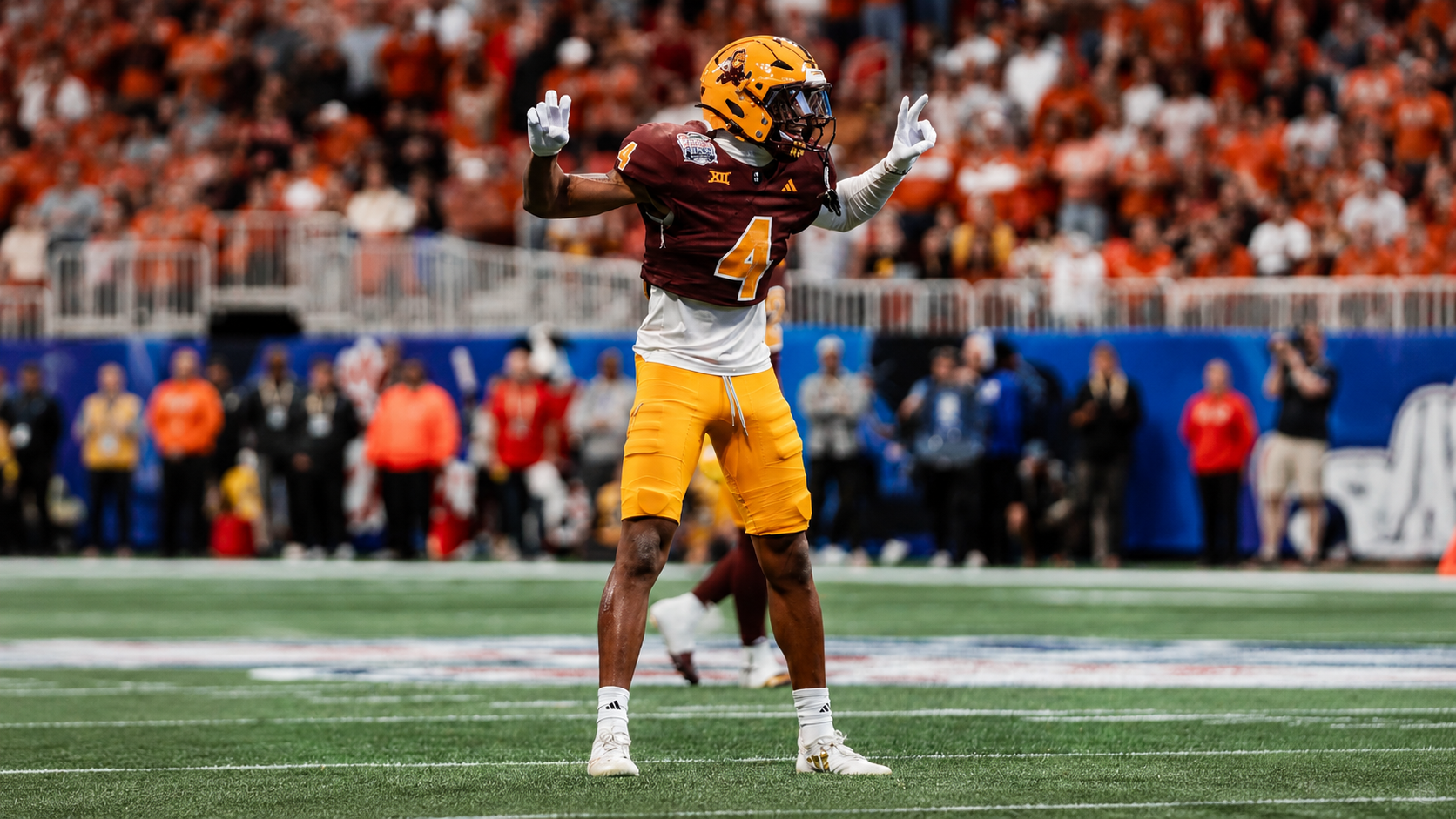
Somewhere out past third-team all-conference and undrafted-but-undaunted, Myles Rowser has been playing football under an assumed identity for three years now. Everyone just calls him "Ghost." It fit when he was terrorizing Big 12 receivers at Arizona State, impossible to find until the exact moment he arrived at your sternum. It fits even better now, because as of Monday, Ghost Rowser is walking back onto a college football field—which, if you think about it, is the whole idea of a ghost.
The announcement broke late Monday night: the Coogs signed him, the do-everything safety who toured college football like a traveling revival: Campbell for the opening, New Mexico State for the middle chapters, and Arizona State for the run that made him famous—182 tackles, seven and a half for loss, a sack, and eight passes swatted into the Tempe dust across two seasons and 27 games, enough to get himself voted onto the Big 12's all-conference team last fall.
Rowser did what a player is supposed to do when the tape runs out: declared for the NFL Draft in December, thanked the three programs that had a hand in raising him, and waited for a phone call that never came. Undrafted. That is usually where these stories end, on a couch somewhere, a young man discovering the sport has decided it's finished with him.
Except the NCAA, in one of the stranger plot twists this game has produced lately, reached back into the grave. A court order this month restored a fifth season to players from Rowser's high school class of 2022—the "5 for 5" ruling, as dry a piece of legal Latin as college football has ever turned into a resurrection. Rowser, presumed dead to the college game since spring, rose up, dusted himself off, and re-entered the portal on August 16th. Eight days later, he's a cougar. If that isn't a haunting, nothing is.
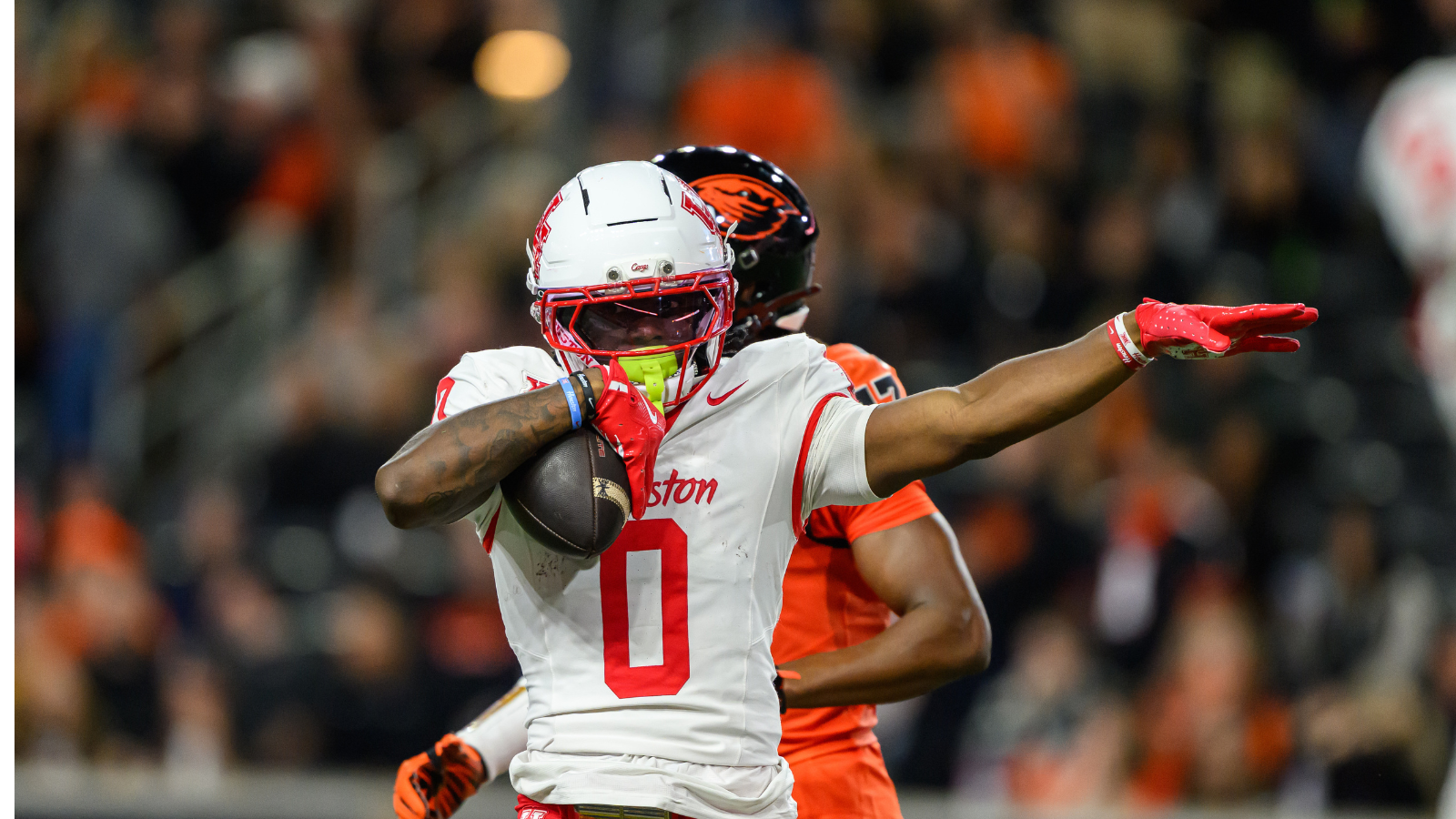
He wasn't lonesome in the graveyard, either. On the same Monday, Houston officially welcomed back a receiver who'd been gone almost as long: Stephon "Boogie" Johnson is out of the portal by way of a Lisfranc fracture, a denied medical redshirt, and a tryout at a New York Giants minicamp that didn't pan out.
Johnson led Houston's receivers with 32 catches for 402 yards in 2024, then broke his foot last October against Oklahoma State—the very program that signed him out of high school, which is the kind of detail a screenwriter would cut for being too on the nose. He declared for the draft, convinced his account was closed. When the same eligibility ruling reopened it last month, he put it about as plainly as a man can: "I'm back, baby."
A ghost and a boogeyman are reunited under the same headset on Cullen Boulevard. Willie Fritz didn't write this bit of theater—the NCAA's lawyers did, in a courtroom that has never once smelled like liniment or turf—but Fritz will take delivery all the same. A defense that lost pieces to the draft and the portal alike gets back a hard-hitting safety with two years of proven range. A receiving room that had already moved on without Johnson now has to make space for him again, sorting out a depth chart that was plenty crowded before the dead started walking. Strip away the metaphor, and the football underneath still holds up.
Houston's defense has been the sturdier half of Willie Fritz's operation since he arrived—fourth in the Big 12 in yards allowed back in 2024—and it enters year three under coordinator Austin Armstrong, who brought an aggressive, ball-hunting scheme up from Florida. Rowser fits it: a downhill safety who piled up nearly a hundred tackles a season at Arizona State without disappearing in coverage, exactly the profile Armstrong's defense is built to feature.
He lands in a safety room that already has senior Kentrell Webb, a returning tackling leader, and Tulane transfer Javion White, who earned all-conference recognition in the American a year ago—real competition, not a handout, but the kind Rowser has been winning at every stop of his career.
On offense, Johnson's return solves a specific problem, not a general one. Houston's receiving corps is deep, with Amare Thomas back as the room's headliner, but deep isn't the same as complete. What the Cougars lacked without Johnson was a receiver who could threaten the top of a defense—the way he did on a 74-yard touchdown against Rice a year ago, or on the string of explosive gains he put together before the injury. Quarterback Conner Weigman already has the chemistry with him; he just spent most of 2025 with nowhere to throw it.
None of it is guaranteed. Eligibility rulings hand back a season, not a starting job, and a safety who's played for three schools in four years and a receiver a year removed from a Lisfranc fracture both have something to prove before September. But roster-building in this era rewards programs willing to bet on established production over projection, and Houston just added two players with real track records for the price of a roster spot, not a recruiting battle.
There's a version of this column that treats it as a compliance office footnote—a procedural quirk of eligibility law that nobody outside a general counsel's office fully understands. That would be selling it short. College football's oldest superstition is that the season eats its players and doesn't give them back. On a Monday in August, in a Houston front office, it did exactly that. Twice. And neither of the ones who came back was finished haunting anybody.