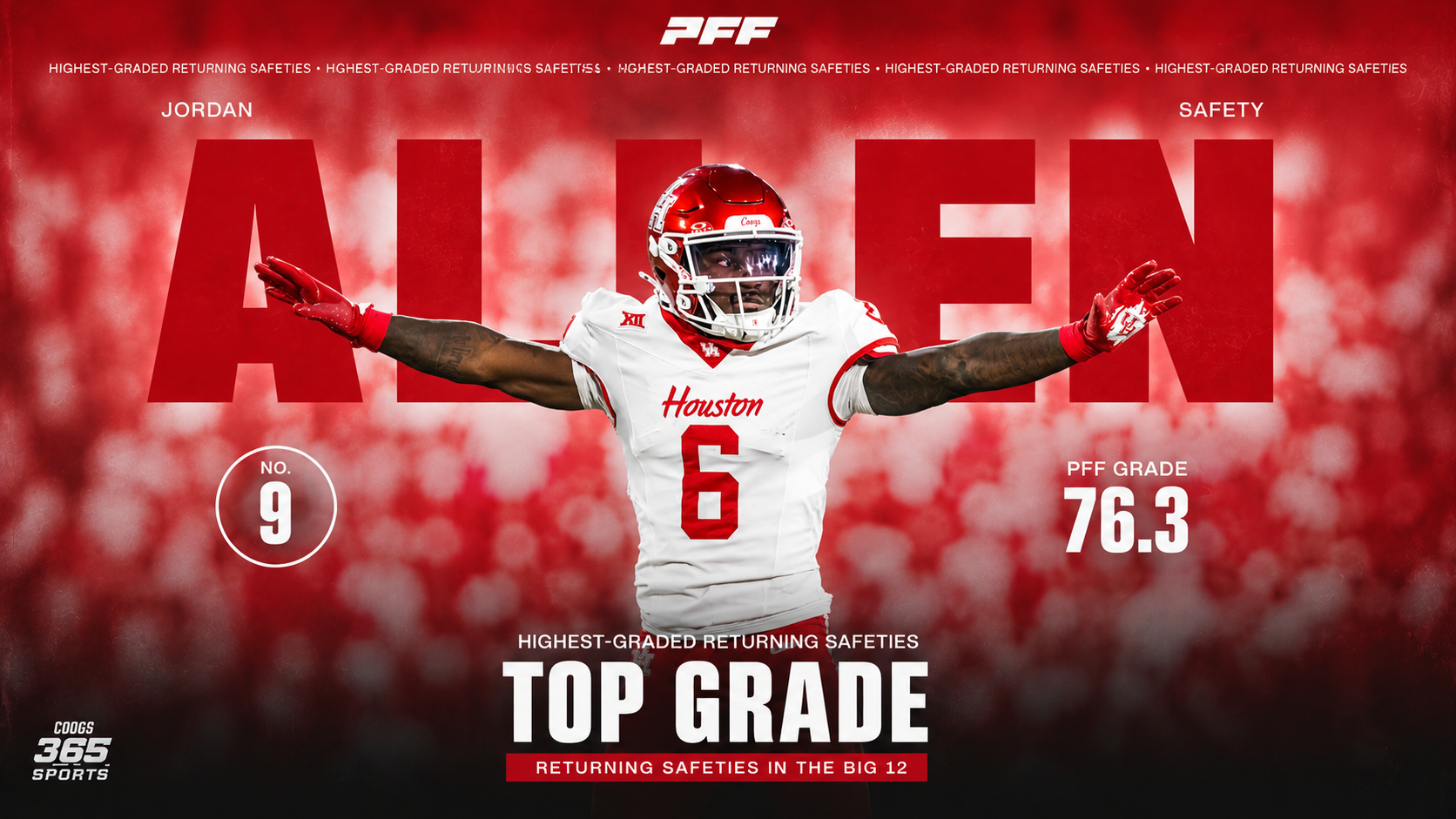

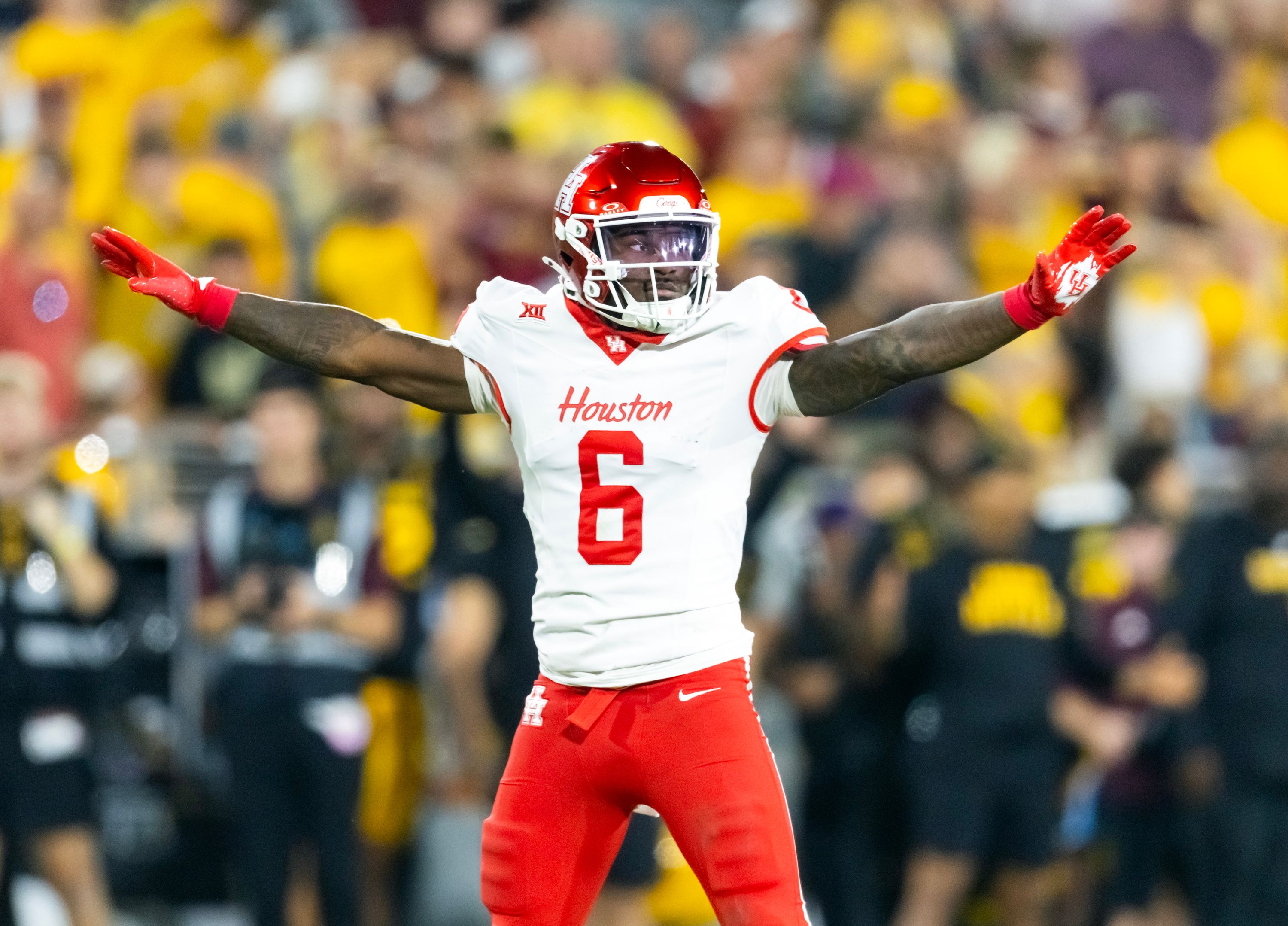
Top two starts in three years at LSU. Thirteen starts in one season at Houston. Jordan Allen didn't have a breakout year in 2025; he had a math problem finally solved.
For three seasons in Baton Rouge, LSU's defensive back room buried a player whose PFF grades kept insisting he belonged on the field more than the depth chart ever allowed. Hand him a starting job for a full season, and the same efficiency that flashed in scattered LSU reps just kept showing up, week after week, for 13 straight starts. That's the case for Allen as one of the Big 12's true X-factors heading into 2026: the tape was always good. Houston just gave it enough snaps to become a résumé.
The Numbers That Matter
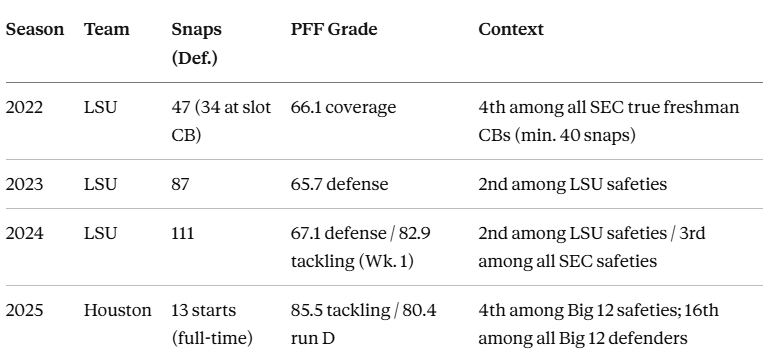
Look at that grade trajectory. It doesn't spike out of nowhere; in 2025 it's a straight line. Allen graded top-two on his own position room at LSU in back-to-back seasons (2023, 2024) despite playing fewer than 90 defensive snaps each year. The efficiency was never in question. The sample size was large.
The Real Headline Stat: 7.4%
Forget total tackles for a second. The number that should get Allen national attention is his missed tackle rate of 7.4 percent in 2025, the second-lowest mark among every safety in the Big 12. That's not a compiler padding a tackle column against soft competition; that's a defender executing at an elite rate on nearly every rep he's asked to take on.
https://twitter.com/jordanallen2022/status/2057558664370622963?s=20
Pair that with an 85.5 PFF tackling grade for 16th among all Big 12 defensive players regardless of position, and you have one of the conference's most reliable open-field tacklers at a spot where missed tackles routinely turn 5-yard gains into touchdowns.
The volume backs up the grade, too: seven games at 80-plus in PFF tackling grade and nine at 70-plus across a 13-start season. That's not a hot streak. That's a floor.
The Coverage Profile Nobody's Talking About
Allen's flashed coverage ability at three different alignments: slot corner as a true freshman, free safety, strong safety, and now weak safety at Houston, and PFF's numbers back the versatility. His 66.1 coverage grade as an 18-year-old ranked fourth among every true-freshman corner in the SEC with qualifying snaps.
Fast forward to 2025, and he was a core piece of a Houston secondary that finished 19th nationally in team PFF coverage grade (89.4), proof the coverage instincts that flashed in limited LSU reps scaled up in a full-time role, not just the tackling.
Why the Portal Move Unlocked Him
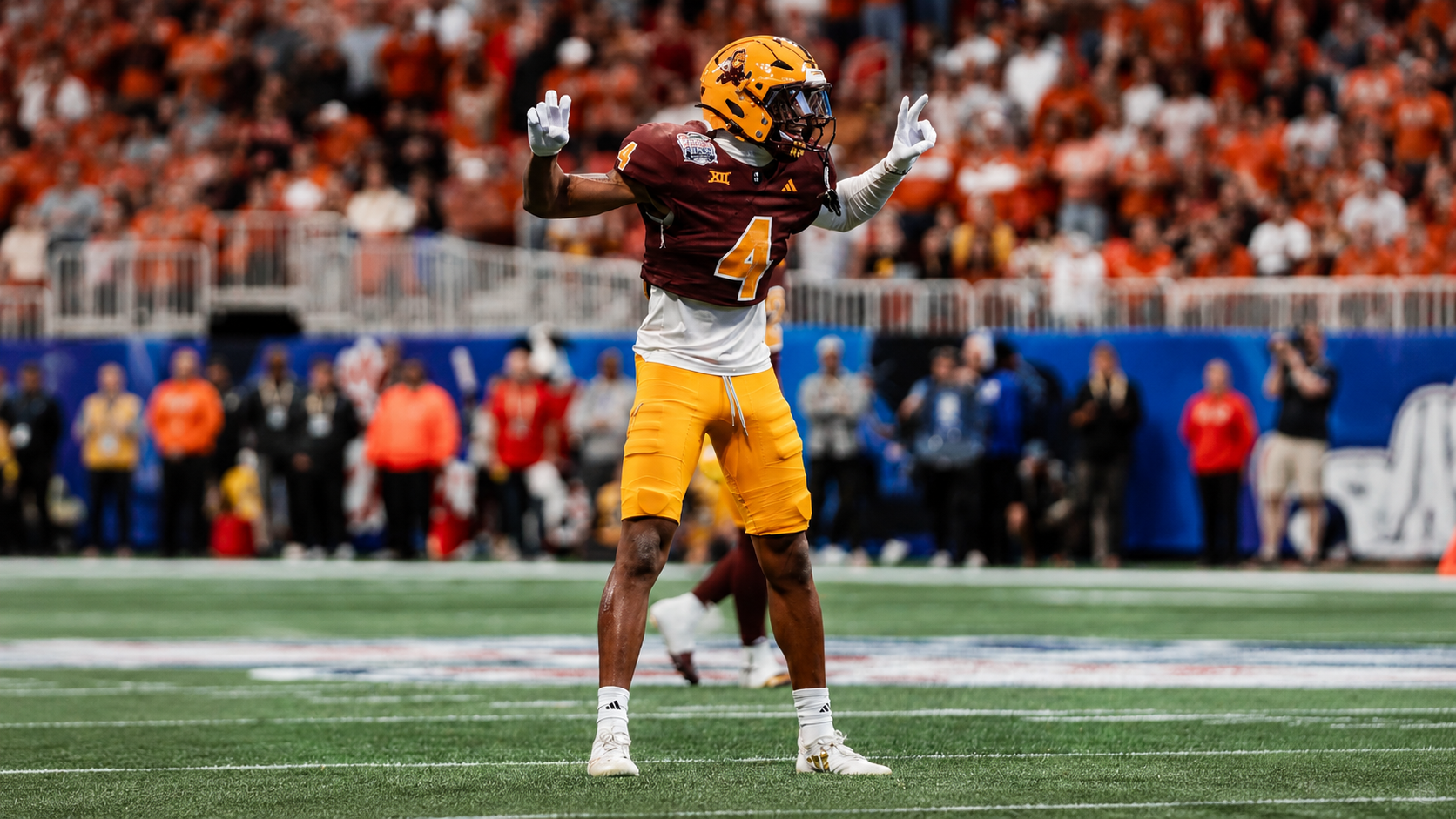
This is the actual analytical story here, and it's an infrastructure problem, not a talent problem. LSU's defensive back room churns through blue-chip signees and portal transfers every cycle Allen was stuck behind that wave for three straight years, never getting more than two starts or 140 total snaps in a season despite grading top-two among his own position group twice.
Houston handed him a defined job weak safety, every week and the per-snap numbers simply extrapolated across a full season instead of a handful of spot starts. It's the cleanest case study you'll find of a "grade vs. opportunity" gap actually closing.
The Verdict: Bet on the Math
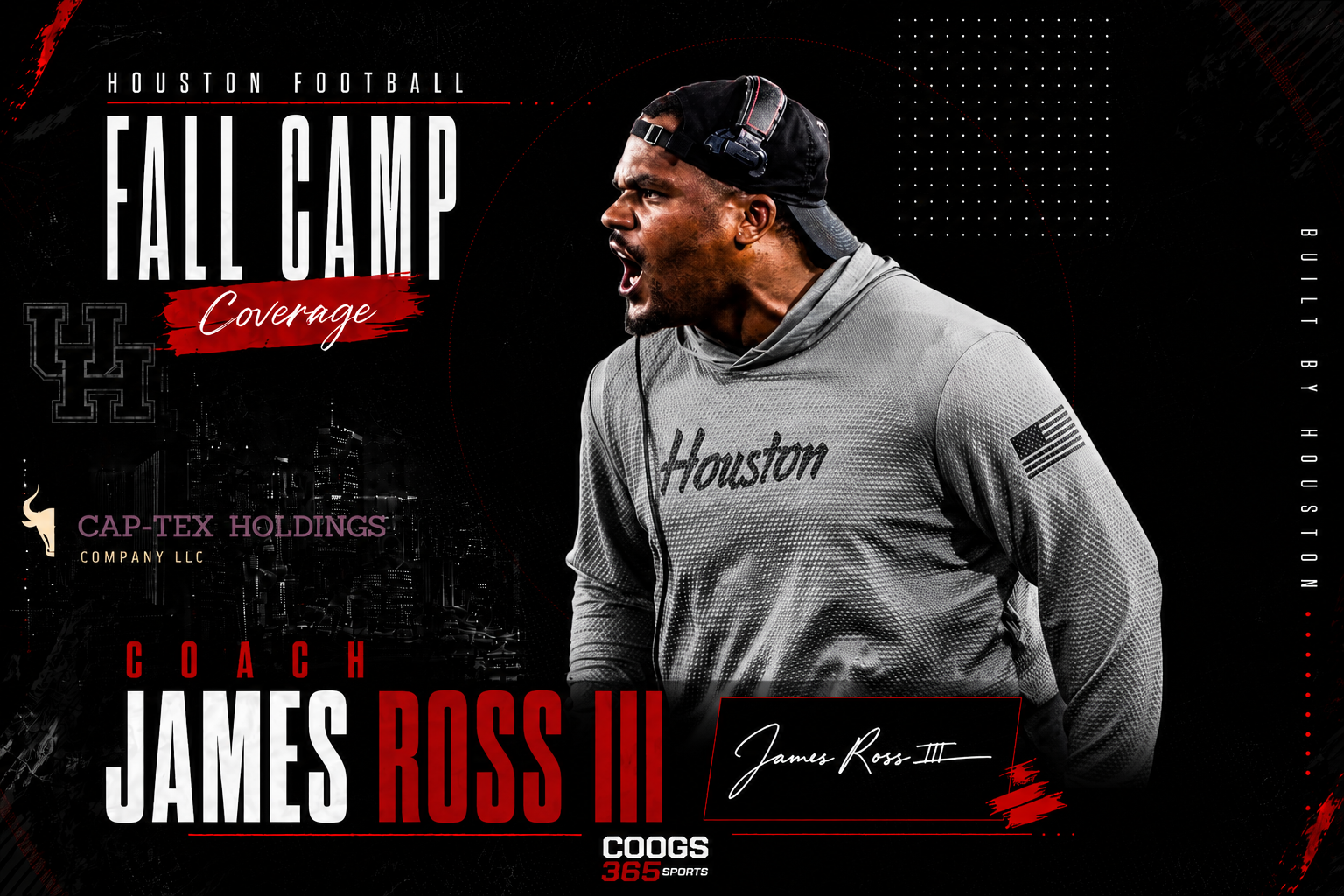
Houston enters 2026 ranked and expected to contend, not rebuild — a far different landing spot than the one Allen inherited as an unproven transfer a year ago. Defensive coordinator Austin Armstrong is back for year two of continuity, Allen still pairs with free safety Kentrell Webb to form one of the Big 12's most experienced safety tandems, and the only real change at the position is a new coach, Marcus Trice, inheriting a player who'd already done the hard part before Trice ever got here.
That's the part the rest of the conference should be worried about. Every number in this piece — the 66.1 coverage grade as an 18-year-old, the top-two grades buried behind LSU's two-deep, the 7.4 percent missed-tackle rate as a first-time full-time starter describes the same player getting more reps, not a different one getting hot.
Jordan Allen never needed a career year to justify the grade. He needed a second season to prove the first one wasn't the ceiling. He gets that in 2026, and on the numbers alone, betting against him would be the actual upset.